






A New Scar on an Ancient Face
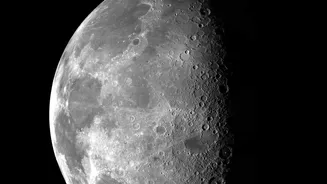
Scientists have named the new feature McGetchin crater, and it is truly exceptional. Measuring a staggering 728 feet (222 meters) across and 141 feet (43 meters) deep, the crater is large enough to swallow a multi-story building. It was formed sometime
between April and May of 2024 when an asteroid or comet fragment, estimated to be the size of a three to six-story building, slammed into the lunar surface. This wasn't just a minor cosmic pebble; it was a significant event that left a dramatic mark. The discovery was announced in September 2026, following extensive analysis. This isn't just another crater on a pockmarked surface; it is the largest newly formed impact crater that has been identified anywhere in our solar system to date.
The Cosmic Detective on the Case
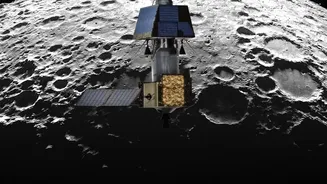
The discovery was made thanks to NASA's Lunar Reconnaissance Orbiter (LRO), a robotic spacecraft that has been circling the Moon for over 17 years. Its mission is to map the lunar surface in incredible detail, helping scientists understand its geology and identify potential resources. The crater wasn't spotted in real-time. It was an eagle-eyed image processing specialist, Robert Wagner, who noticed an unusual bright spot while conducting a routine data review in October 2025. By meticulously comparing 'before' and 'after' images taken by the LRO's cameras, scientists confirmed that a massive impact had occurred. The LRO's long-running mission is what made this possible, providing a baseline of images that allows for the detection of such rare and sudden changes.
Why This Impact Is So Rare
The headline's claim of a "once-in-132-years" event isn't hyperbole. While the Moon is constantly bombarded by small meteoroids, an impact powerful enough to create a crater the size of McGetchin is statistically very rare. Scientists estimate that an event of this magnitude occurs on the Moon only about once every century, or even less frequently. Finding such a fresh, large crater during the LRO's operational lifespan is described by researchers as being 'extremely lucky'. It gives them an unprecedented opportunity to study the immediate effects of a major impact before the evidence is slowly erased by space weathering and subsequent smaller impacts.
A Window Into the Modern Moon
The McGetchin crater is more than just a spectacular hole; it's a natural laboratory. The impact didn't just carve out a crater; it significantly altered the surrounding landscape. LRO's instruments detected a 4.3-mile-wide (7-kilometer-wide) 'cold spot' around the impact site. This thermal anomaly shows that the impact blasted away surface material and 'fluffed up' the lunar soil, or regolith, making it less dense and less able to hold heat during the cold lunar night. Understanding how impacts churn and change the lunar soil is critically important for future exploration. As NASA and other agencies plan for long-term lunar bases, knowing the properties of the ground is essential for designing landers, rovers, and habitats. This discovery provides vital, real-world data that will help ensure the safety and success of future human missions to the Moon.