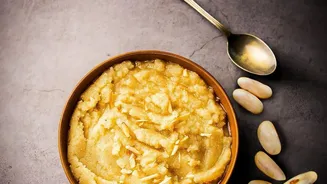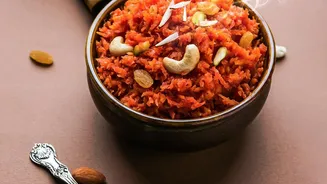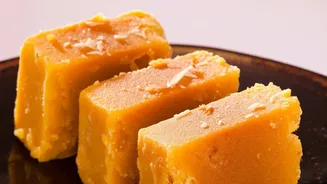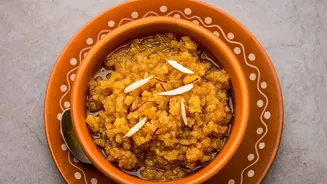




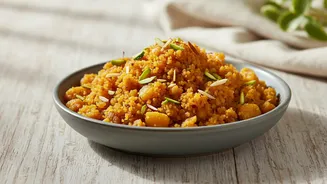
A Perfect Dessert for a Pious Month
Sawan is a time of devotion, often marked by fasting, particularly on Mondays (Somvar). During these fasts, devotees adhere to a 'satvik' diet, avoiding grains, lentils, onions, and garlic. Potatoes are a staple ingredient in 'vrat' or fasting cuisine
because they are permissible and provide a good source of energy. Aloo Halwa fits perfectly into this tradition. It is a 'falahari' dish, meaning it can be consumed during a fast. Its warmth is deeply comforting during the damp monsoon weather, while the richness from ghee and sugar provides the necessary energy to sustain you through the day. This makes it not just a dessert, but a nourishing and spiritually appropriate meal to enjoy after prayers.
The Golden Ingredients
The beauty of Aloo Halwa lies in its simplicity. You only need a handful of common kitchen ingredients to create this luscious dessert. The quality of your ingredients, especially the ghee, will make a significant difference in the final taste and aroma. Here is what you will need: - Potatoes: 4-5 medium-sized potatoes, boiled, peeled, and cooled. - Ghee: ½ cup of pure desi ghee, as this is the heart of the halwa's flavour. - Sugar: ¾ to 1 cup, which you can adjust according to your preferred sweetness. - Milk: ¼ cup, optional, but can add to the richness. Some recipes also use saffron-infused milk for colour and aroma. - Cardamom Powder: ½ teaspoon of freshly ground cardamom for fragrance. - Nuts: A mix of chopped almonds, cashews, and pistachios for roasting and garnishing.
Crafting the Halwa, Step by Step
Making Aloo Halwa is a process of patience that rewards you with incredible flavour. The secret to a non-lumpy, smooth halwa is to grate the boiled potatoes instead of mashing them unevenly. First, heat a heavy-bottomed pan or kadai and add about three-quarters of the ghee. Once it melts, add the grated potatoes. Begin to sauté the potatoes on a medium-low flame. It is crucial to stir continuously to prevent the potato from sticking to the bottom or burning. This roasting process is what develops the halwa’s characteristic nutty aroma and golden-brown colour. Continue this for about 12 to 15 minutes, until the potato mixture becomes fragrant and starts to pull away from the sides of the pan.
Reaching Sweet Perfection
Once the potatoes are well-roasted, it is time to add the sugar. As you stir the sugar in, the mixture will loosen and become slightly liquid as the sugar melts. Don't worry, this is part of the process. Keep stirring on a medium flame. The mixture will gradually thicken again. This is also the stage to pour in the milk if you are using it. Continue to cook, stirring constantly, until the halwa thickens, comes together as a single mass, and you see the ghee beginning to separate from the sides of the pan. This indicates that the halwa is perfectly cooked. Now, stir in the cardamom powder and most of the chopped nuts, saving some for the garnish. Adding a final teaspoon of ghee at the end will give the halwa a beautiful, glossy finish.
Serving Suggestions and Pro Tips
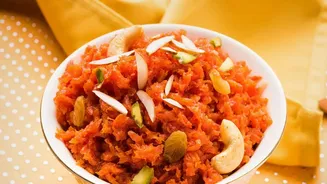
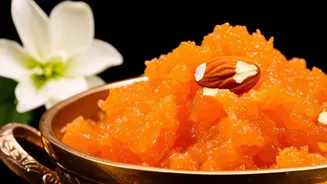
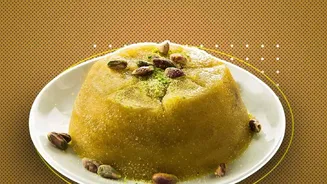
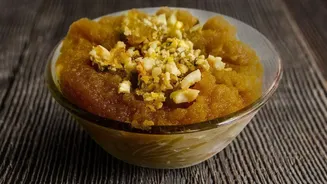
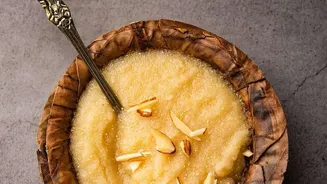
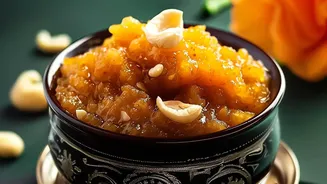
Aloo Halwa is best served warm, straight from the kadai, garnished with the remaining chopped nuts. For an extra touch of elegance, you can add a few strands of saffron or even edible rose petals. While the classic recipe is divine on its own, you can introduce variations. Some people like to fry raisins in ghee until they plump up and add them to the halwa along with the nuts for a sweet and tangy bite. If you want a richer, more 'mawa'-like texture, you can add a couple of tablespoons of milk powder or khoya (milk solids) towards the end of the cooking process. Always use a heavy-bottomed pan to ensure even cooking and prevent the halwa from scorching.