

What Is an Evening Elongation?
In simple terms, an elongation is the moment when a planet that orbits closer to the Sun than Earth—namely Venus or Mercury—appears farthest from the Sun in our sky. Because Venus is tethered by gravity to the Sun, it never strays far, appearing either
as an 'evening star' after sunset or a 'morning star' before sunrise. On August 15, 2026, Venus reaches its 'greatest eastern elongation'. This means it will be at its maximum possible angular distance—about 46 degrees—from the sun in the evening sky. This wide separation allows it to linger longer after sunset, climbing higher and shining brighter against the deepening twilight, making it the perfect time to spot our planetary neighbour.
The Unmistakable Brilliance of Venus
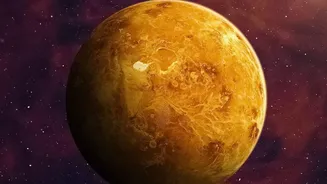
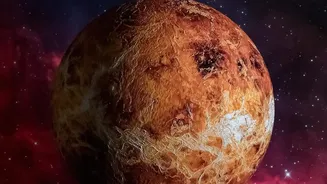
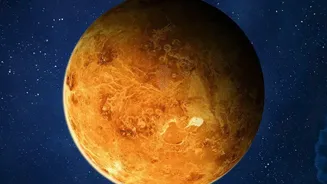
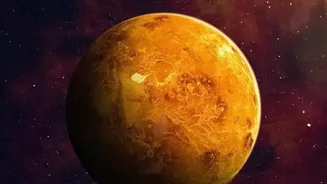
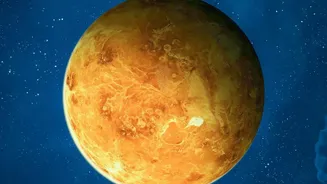
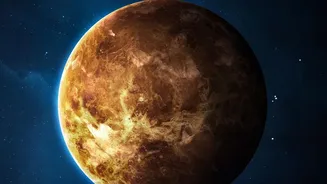
There's no need to worry about confusing Venus with a star or another planet. It is, after the Sun and the Moon, the brightest natural object in our sky. Its light is steady, unlike the twinkling of distant stars. On and around August 15th, it will shine at a dazzling magnitude of -4.4. This incredible brightness is due to its highly reflective, thick cloud cover, which bounces sunlight back towards us. You will easily be able to spot it in the west-southwest even before the sky is completely dark. For centuries, this reliable and radiant appearance has captivated humanity, earning it the affectionate titles of the evening and morning star.
How to See Venus on August 15th
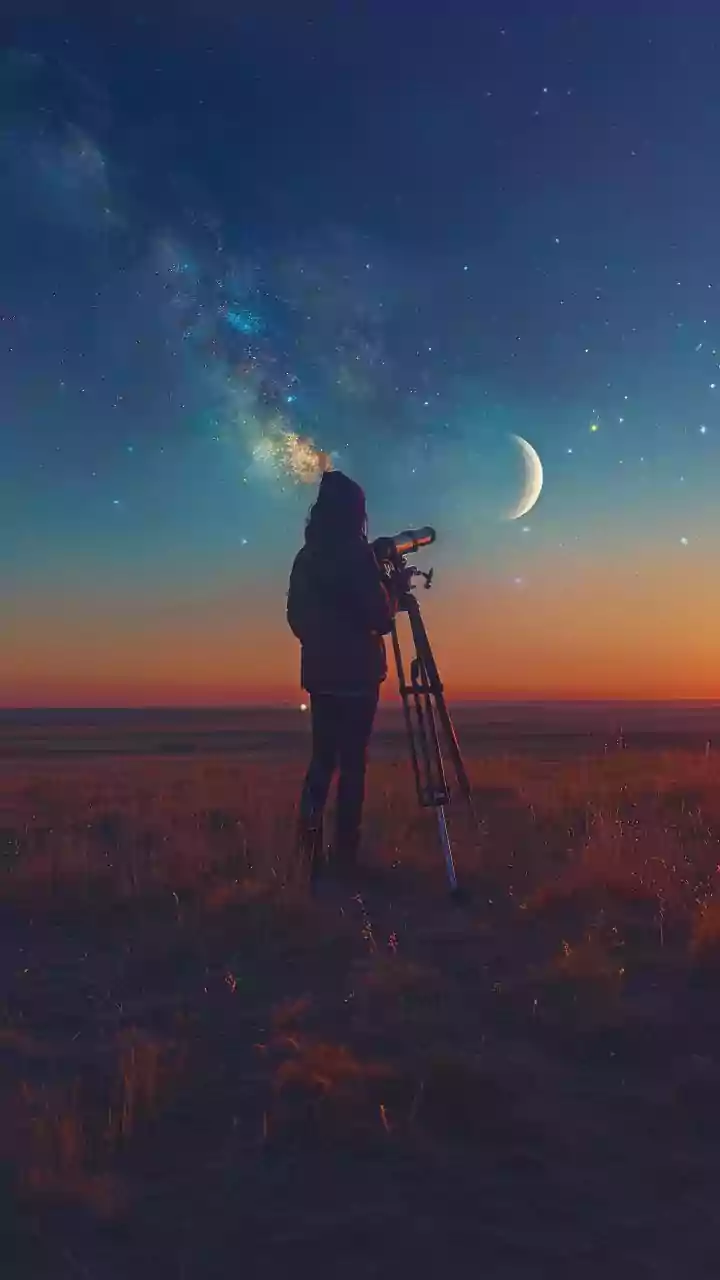
Finding Venus requires no special equipment or expertise. The only things you need are a clear view of the western horizon and good timing. Start looking about 30 to 45 minutes after sunset. Venus will be the first and brightest point of light to emerge in that direction. On the evening of August 15th, it will be joined by a slender crescent Moon, which will be situated nearby, making for an especially picturesque sight. As twilight fades, the planet will appear to hang like a lantern in the sky before setting a couple of hours after the Sun. The key is to look early, as it will get lower on the horizon as the night progresses.
Do You Need a Telescope?
While Venus is a spectacular naked-eye object, using binoculars or a small telescope will reveal a fascinating detail: its phases. Just like our Moon, Venus goes through a cycle of phases as it orbits the Sun. Around the time of its greatest elongation on August 15th, a telescope will show that Venus appears about half-lit, similar to a first-quarter Moon. This is because from our viewpoint on Earth, we are seeing the sunlit side of Venus at an angle. Observing these phases is a rewarding experience that connects you directly to the orbital mechanics of our solar system, a discovery first made by Galileo Galilei that helped prove the Sun was the centre of our solar system.
Tips for the Best Viewing Experience
To make the most of this celestial event, a few simple preparations can help. First, check your local weather forecast for clear skies. Clouds, of course, will spoil the view. If you live in a city with significant light pollution, try to find a spot with an unobstructed view to the west, like a park, an open field, or a high floor of a building. While Venus is bright enough to cut through city lights, a darker environment will make the experience more immersive. Give your eyes about 15 minutes to adapt to the darkness, which will help you see not only Venus in its full glory but also the surrounding stars as they begin to appear.