




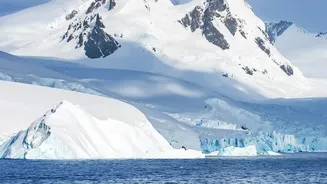
A Tale of Two Antarcticas
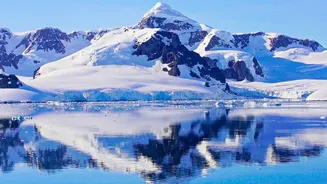
To understand the significance of this new finding, it's crucial to know that Antarctica isn't a single, uniform block of ice. Scientists see it as two distinct regions with very different behaviours. The West Antarctic Ice Sheet is smaller, largely based
below sea level, and is known to be losing ice at an alarming rate as it's eaten away by warming ocean waters. In contrast, the East Antarctic Ice Sheet is a true giant — it's ten times larger, sits mostly on high-altitude bedrock, and has long been considered far more stable. If the entire East Antarctic ice sheet were to melt, it could raise global sea levels by nearly 200 feet. This colossal scale is why any change in the east, no matter how subtle, warrants close attention from the global scientific community.
What the New Study Reveals
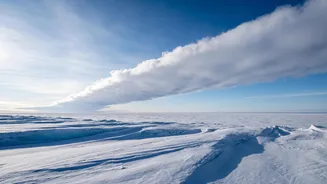
Several recent studies, including a notable one published in the journal Nature, have focused on a surprising trend: a significant increase in snowfall over East Antarctica. Between 2021 and 2023, the continent experienced an astonishing gain of about 695 billion tons of ice mass due to exceptionally heavy snow. Researchers linked this phenomenon to atmospheric changes originating thousands of miles away. Persistent warming in the tropical oceans altered air circulation patterns, creating 'atmospheric rivers' that funnelled more moisture towards the cold continent, resulting in sustained, heavy snowfall, particularly in regions like Queen Mary Land and Wilkes Land.
More Snow, More Ice? Not So Simple
It might seem logical to conclude that more snow means Antarctica is recovering from ice loss. However, the reality is far more nuanced. Scientists use a concept called 'mass balance' — a budget that weighs ice gained from snowfall against ice lost from melting and glaciers breaking off into the ocean. While the recent surge in snowfall did temporarily add mass and even slightly slowed Antarctica's overall contribution to sea-level rise, it does not reverse the long-term trend of ice loss. The West Antarctic Ice Sheet continues to melt rapidly, and even some glaciers in the supposedly stable East are now showing signs of vulnerability to warming ocean waters from below.
The Paradox of a Warming World
Paradoxically, increased snowfall in the planet's coldest regions is a predicted consequence of global warming. The fundamental physics is straightforward: a warmer atmosphere can hold more moisture. This leads to more precipitation, which falls as snow in the frigid environment of Antarctica. For every degree of regional warming, scientists estimate that snowfall on the continent can increase by about 5 percent. So, while it may seem counterintuitive, the heavier snow is actually a symptom of the very climate change that is causing ice to melt elsewhere at an accelerating rate. The new findings don't contradict climate change; they confirm its complex and sometimes surprising impacts.
Implications for Global Sea Levels
The key question is what this means for future sea-level rise, a critical issue for coastal communities around the world, including in India. The increased snowfall does provide a mitigating effect, partially offsetting some of the ice being lost from other parts of Antarctica and Greenland. However, scientists are clear that this extra snow is not enough to stop the overall trend of rising seas. Projections show that as the oceans continue to warm, the rate of melt, particularly in West Antarctica, is expected to outpace any gains from snowfall. This study serves as a crucial reminder that the Antarctic Ice Sheet is a dynamic and complex system, and its response to a warming climate is not uniform across the continent. Understanding these regional differences is vital for refining our projections and preparing for the future.