
The Soul of Thai Cuisine: A Balancing Act
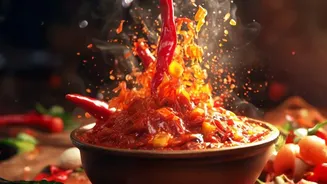
At its heart, Thai food is a masterclass in balance. It's not about a single dominant taste, but a harmonious blend of at least two, and often more, of the core flavour pillars: sweet, sour, salty, and spicy. Think of the complex profile of a Tom Yum
soup, where the sourness of lime and lemongrass cuts through the heat of chillies, all grounded by the salty depth of fish sauce. This philosophy of harmony is central to the cuisine's identity, a tradition shaped by centuries of cultural exchange with India, China, and beyond. Before chilies arrived with Portuguese traders in the 16th century, Thai food was very different. Its evolution is a story of adaptation, absorbing new ingredients while always seeking that signature balance.
The Freshness Hurdle Abroad
One of the biggest challenges when cooking Thai food outside of Thailand is sourcing the correct fresh ingredients. The aromatic intensity of Thai cooking relies heavily on herbs and roots that are often difficult to find or lack the potency of their native-grown counterparts. Ingredients like galangal, with its sharp, citrusy-pine flavour, and kaffir lime leaves, with their distinct floral aroma, are fundamental. Likewise, a true Pad Krapow Gai requires holy basil, which has a peppery, clove-like flavour worlds away from the sweet Italian basil commonly found in Western supermarkets. While many ingredients can be found frozen or dried in Asian grocery stores, a crucial element of vibrancy can be lost.
Smart Swaps Without Sacrificing Flavour
While finding perfect ingredients is ideal, it’s not always possible. The key is to make intelligent substitutions that honour the spirit of the dish. For kaffir lime leaves, the zest of a regular lime can provide a similar citrusy brightness, though it lacks the unique aromatic quality. If you can't find lemongrass, a strip of lemon zest can serve as a last-resort stand-in. While many purists argue there's no substitute for galangal, a high-quality powdered version is better than nothing. For holy basil, some chefs suggest Italian basil is a closer approximation than Thai sweet basil. The goal isn't perfect replication but to get as close as possible to the intended flavour profile.
Building a Reliable Thai Pantry
While fresh ingredients pose a challenge, a well-stocked pantry of non-perishables is your greatest ally. These items are the foundation of Thai flavour and travel well. A high-quality fish sauce is non-negotiable; it provides the essential salty and umami depth that underpins many dishes. Palm sugar offers a mellow, caramel-like sweetness that is more complex than granulated white sugar. Tamarind concentrate, available as a paste or block, delivers the classic sour notes essential for dishes like Pad Thai. With these three pillars—fish sauce, palm sugar, and tamarind—you have the core sweet, salty, and sour elements ready to go, giving you a massive head start in your quest for authenticity.
Technique: The Ingredient You Don't Buy
Ultimately, capturing the essence of Thai food is as much about technique as it is about ingredients. Many Thai households still use a mortar and pestle to pound curry pastes. This process doesn't just combine ingredients; it bruises the herbs and spices, releasing their essential oils and creating a depth of flavour that a food processor can't replicate. Understanding how to manage heat in a wok, how to layer flavours by adding ingredients in a specific order, and constantly tasting and adjusting for balance are skills that transcend any single ingredient list. It’s about listening to the food and guiding it toward that perfect, harmonious chord of flavours.