




A Landmark Moment for Indian Railways
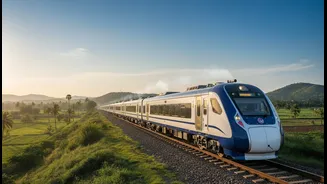
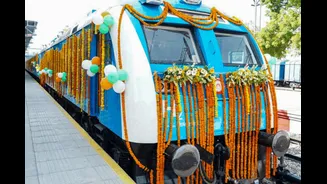
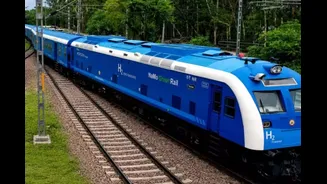
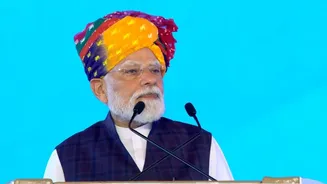
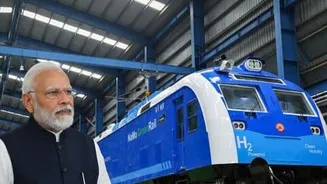
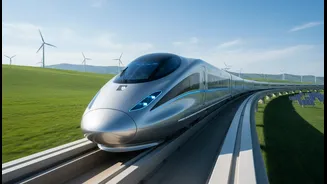
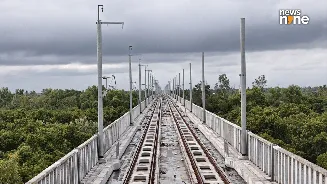
On July 17, 2026, Prime Minister Narendra Modi inaugurated the commercial services of India's first indigenously designed and built hydrogen-powered train. The event at Haryana's Jind railway station marks a pivotal moment, shifting Indian Railways into
a new era of sustainable transport. The train, a 10-coach rake, will run on the 89-kilometre Jind-Sonipat line, a route chosen for this pilot project. This launch is not just about a new train; it represents a significant step in India's journey away from fossil fuels like diesel and coal toward cleaner energy sources. With this move, India enters an exclusive club of countries like Germany, Japan, and China that are actively exploring hydrogen for rail mobility.
How Does a Hydrogen Train Actually Work?
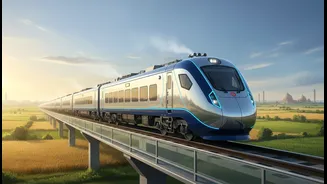
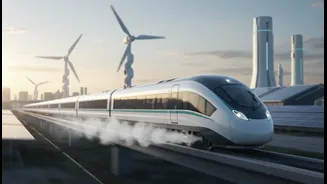
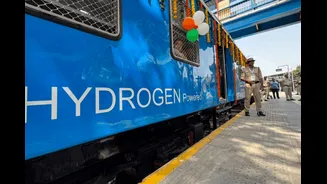
Think of a hydrogen train as a self-powered electric train, but without the need for overhead wires. Instead of burning fuel, it uses a fuel cell system onboard. In this system, hydrogen stored in high-pressure tanks combines with oxygen taken from the air. This electrochemical reaction generates electricity to power the train's motors. The only byproduct of this process is pure water vapour and some heat, making it a zero-emission mode of transport at the point of use. This technology offers the best of both worlds: the clean operation of an electric train and the self-contained power of a diesel locomotive, all while being significantly quieter.
A 'Make in India' Marvel
A key highlight of this project is its indigenous development. Prime Minister Modi noted that the train was designed by Indian engineers and manufactured by an Indian company, calling it a successful example of the 'Make in India' initiative. While other countries have experimented with shorter, two or three-coach hydrogen trains, India has launched a 10-coach train capable of carrying around 2,600 passengers. The train operates at a speed of 75 kmph on its designated route and was created by retrofitting an existing Diesel Electric Multiple Unit (DEMU) rake with a new hydrogen-electric propulsion system. This showcases India's growing capability to develop and scale advanced, clean energy technologies domestically.
Part of the 'Hydrogen for Heritage' Vision
This launch is a cornerstone of the Indian Railways' 'Hydrogen for Heritage' initiative, announced in 2023. The program aims to introduce 35 hydrogen trains on various heritage and hill routes across the country. These routes are often ecologically sensitive, and replacing diesel locomotives with clean hydrogen power will help preserve their natural beauty. The Jind-Sonipat section was selected as the first pilot to test and validate this technology in real-world conditions. Success here could pave the way for wider adoption on other non-electrified or difficult-to-electrify sections of India's vast railway network.
The Road Ahead: Promise and Challenges
The benefits of hydrogen trains are clear: zero tailpipe emissions, reduced noise pollution, and decreased reliance on imported diesel. However, the path to widespread adoption has its challenges. The initial costs of producing green hydrogen, building refueling infrastructure, and manufacturing fuel cells are high. For instance, a special hydrogen refueling facility with a 3,000-kg storage capacity had to be built in Jind specifically for this project. Experts suggest that the economic viability of these trains depends on creating a broader hydrogen ecosystem that extends beyond just the railways. While this train marks a monumental achievement, scaling the technology will require continued investment and innovation to bring down costs and build a robust supply chain.