









The Regulatory Squeeze on Fleets
Indian fleet operators are navigating a complex and tightening regulatory landscape. The rollout of BS6 Phase 2 norms has mandated significant reductions in pollutants, especially from diesel engines, through technologies like Diesel Particulate Filters
(DPF) and Selective Catalytic Reduction (SCR). These systems, while effective, add to vehicle complexity and maintenance. Compounding this is the Corporate Average Fuel Economy (CAFE) standard. In July 2026, the government released draft CAFE-III norms, set to take effect from April 2027. These rules don't target individual cars but require a manufacturer's entire fleet of vehicles sold in a year to meet an average fuel efficiency and CO2 emission target. This pressure on manufacturers directly translates to fleet buyers, who must now think about the overall emission profile of the vehicles they purchase to future-proof their operations.
The Fleet Balancing Act Explained
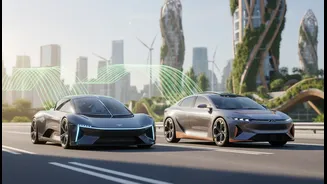
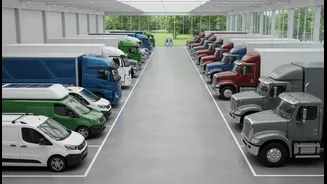
So, how can a logistics company that needs heavy-duty diesel trucks for long-haul routes comply with these tightening standards? The answer lies in fleet balancing. The strategy is simple in concept: for every high-consumption vehicle that is essential for operations, a company can add one or more 'cleaner' vehicles to its fleet. These cleaner models—which include battery electric vehicles (EVs), Compressed Natural Gas (CNG) vehicles, and strong hybrids—have much lower or zero tailpipe emissions. By inducting them, a company lowers the overall average emissions of its entire fleet. This allows businesses to keep using specialised, high-consumption vehicles where no clean alternative exists, while using EVs or CNG models for other tasks, such as last-mile delivery in cities. This creates a portfolio of vehicles where the clean performance of some offsets the emissions of others, achieving a compliant and efficient operational balance.
Beyond Compliance: The Financial Case
While meeting regulations is a primary driver, the financial benefits of a mixed fleet are even more compelling. The concept of Total Cost of Ownership (TCO) is key. Although an EV may have a higher initial purchase price, its running costs are significantly lower. In India, the per-kilometre cost for an EV can be as low as ₹1-₹1.50 when charged at a depot, compared to ₹6-₹7 for a petrol vehicle or ₹4.5 for diesel. CNG vehicles also offer substantial savings, with running costs significantly lower than petrol and diesel. For high-utilisation commercial vehicles that cover long distances daily, these fuel savings accumulate rapidly. Maintenance costs for EVs are also 30-50% lower than for internal combustion engine (ICE) vehicles because they have fewer moving parts, no engine oil, and no exhaust systems to service. Over a five-year period, these savings in fuel and maintenance can more than offset the higher upfront cost, leading to a lower TCO and improved profitability.
Building a Greener, Stronger Brand
Adopting a cleaner fleet is also a powerful branding and strategic tool. In an era where corporate clients and consumers are increasingly environmentally conscious, operating a green fleet can be a significant competitive advantage. It helps companies meet their Environmental, Social, and Governance (ESG) goals, which is often a prerequisite for winning contracts with large multinational corporations. Furthermore, some regions are actively mandating a shift. For instance, authorities in Noida and Ghaziabad have mandated that all commercial fleets must transition to 100% CNG or electric by January 2026 for many services. Proactively adopting a mixed-fleet strategy not only prepares a business for such regulations but also positions it as a responsible and forward-thinking leader in its industry, which can help in attracting both clients and talent.
Navigating the Practical Hurdles
The transition is not without its challenges. The high upfront cost of EVs remains a significant barrier for many small and medium-sized operators. For electric vehicles, establishing a reliable charging infrastructure, whether at depots or along routes, requires careful planning and capital investment. Range anxiety, though diminishing, is still a consideration for certain routes, meaning diesel vehicles remain essential for long-haul, unpredictable journeys for now. Successfully managing a mixed fleet requires a robust fleet management system to optimise vehicle deployment—using EVs for shorter, predictable urban routes and diesel trucks for interstate haulage. It’s about using the right vehicle for the right job to maximize efficiency and returns.