





A Taste of Home, 400 Kilometres Up
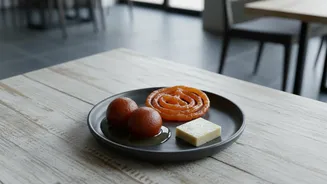
For generations, Indian sweets have marked celebrations on Earth. Now, they've celebrated a new milestone in space. Group Captain Shubhanshu Shukla, during his historic Axiom Mission 4 to the International Space Station (ISS) in 2025, brought along a special
culinary trio: Gajar ka Halwa, Moong Dal ka Halwa, and Aamras. These weren't just personal favourites; they were meticulously prepared, tested, and certified space-ready delicacies. The selection brings a nostalgic and comforting slice of Indian kitchens to the high-tech, sterile environment of a space station, offering a powerful link to home for an astronaut floating far above the world. It represents a moment of immense national pride, showcasing India's rich culinary heritage on a truly global—and orbital—stage.
The Astronaut Behind the Menu
Group Captain Shubhanshu Shukla is no ordinary foodie; he is a decorated Indian Air Force fighter pilot and a seasoned test pilot with over 2,000 hours of flying experience. Hailing from Lucknow, he was selected as one of the four elite astronauts for India's ambitious Gaganyaan mission, the nation's first crewed spaceflight program. His journey to the ISS in June 2025 as part of a privately funded Axiom Space mission made him the first Indian astronaut to visit the orbiting lab since Rakesh Sharma's flight in 1984. His background as a test pilot makes him uniquely suited for the rigours of spaceflight, where precision, calm under pressure, and technical expertise are paramount.
The Science of Space-Ready Sweets
Getting halwa to the ISS is far more complex than packing a tiffin box. The food was developed by the Defence Food Research Laboratory (DFRL) in Mysuru, the same institution preparing the menu for the Gaganyaan mission. Space food must meet incredibly strict standards. It needs to be thermostabilized or freeze-dried to ensure a long shelf life without refrigeration while retaining its nutritional value. The most critical challenge is preparing it for a microgravity environment. Any stray crumbs could float into sensitive electronic equipment and cause catastrophic failures, so food must be specially formulated to be crumb-free. Shukla revealed in a recent podcast that while DFRL had developed an extensive menu of Indian favourites like khichdi and pulao, only the three sweets passed all qualification tests in the limited time available.
An Interstellar Culinary Hit
In a delightful twist, Group Captain Shukla admitted he never got to taste his own stash of Indian sweets in space. He decided to share the Gajar ka Halwa, Moong Dal ka Halwa, and Aamras with his international crewmates aboard the ISS. The Indian delicacies were an instant hit. His fellow astronauts from different countries enjoyed them so much that they polished off the entire supply. While a wonderful moment of cross-cultural sharing, it left Shukla craving familiar flavours. He mentioned that by his 13th day in orbit, he began to long for the salty and spicy notes of Indian cuisine—a wish that was finally fulfilled with banana chips and bhakarwadi from his flight surgeon upon his return to Earth.
A Legacy of Flavour in Orbit
Shukla's space menu continues a proud, if infrequent, tradition. When Wing Commander Rakesh Sharma became the first Indian in space in 1984, he also carried specially prepared Indian food. His menu, which included suji halwa and aloo chole, was also developed by the very same Defence Food Research Laboratory in Mysuru. For over four decades, DFRL has been at the forefront of food science in India, ensuring our soldiers and now our astronauts are well-fed. This latest culinary journey to space builds on that legacy, demonstrating that as India's technological ambitions soar, it continues to hold its cultural identity close.