



Our Twin Global Crises
We are facing two monumental challenges: a planet choking on plastic and a global population requiring more food. Every year, we produce millions of tonnes of plastic waste, with a shockingly small percentage being recycled. This waste clogs our landfills,
pollutes our oceans, and even finds its way into our bodies as microplastics. At the same time, global food demand is projected to soar by mid-century, putting immense pressure on our agricultural systems. What if we could link these two problems, creating a circular solution where one crisis helps solve the other? This is the core idea behind a groundbreaking new field of biotechnology.
How to Turn Plastic into Protein
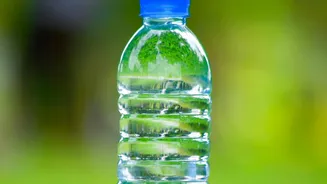
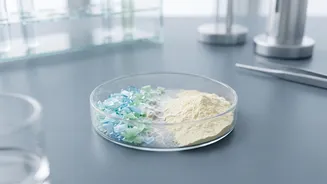
The fundamental concept is surprisingly simple: plastic is made of carbon, and food is also made of carbon. The challenge is converting one form to the other. The answer, scientists are discovering, lies with some of the smallest organisms on Earth: microbes. Researchers have identified and engineered specific strains of bacteria and yeast that can metabolise plastic. The process starts with pre-treating plastic waste, such as common PET bottles, using methods like oxidative hydrothermal dissolution. This technique uses heat, pressure, water, and oxygen to break down the tough plastic polymers into smaller, more accessible molecules. Once broken down, these molecules become a feast for specially programmed microbes. Just as yeast consumes sugar to produce alcohol or bread, these microbial “factories” consume the plastic-derived compounds and convert them into biomass rich in proteins and fats.
Meet the Microbial Chefs
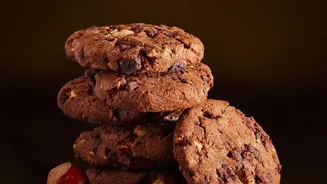
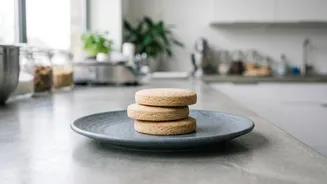
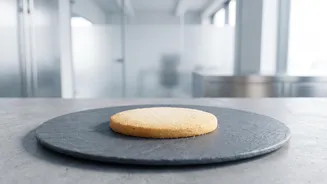
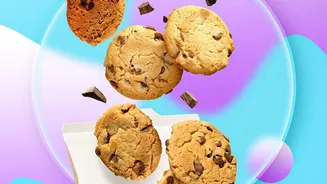
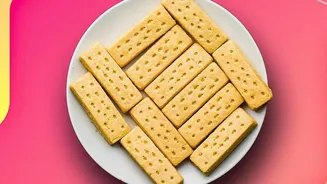
Several research teams are pioneering this technology. At Southern Illinois University Carbondale, a team has successfully programmed yeasts to transform PET plastic and agricultural waste into edible proteins, vitamins, and even flavouring compounds. Their work, part of a NASA project to develop food for deep-space missions, has resulted in a prototype cookie called a µBite (pronounced “micro-bite”). Similarly, researchers from the University of Illinois and Michigan Technological University have developed a process to turn plastic waste into an edible protein powder using a community of microbes. These teams are not just breaking down plastic; they are upcycling it into high-value products. For instance, one yeast strain has been engineered to produce vanillin, the compound responsible for vanilla's flavour and aroma, from the pre-treated plastic.
Is It Actually Safe to Eat?
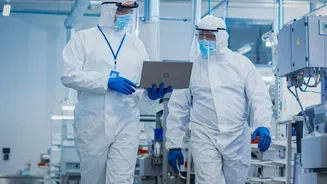
The idea of eating something derived from plastic naturally raises safety concerns. It's crucial to understand that this process does not involve eating plastic itself. The microbes completely break down the plastic polymers into their basic chemical building blocks. The final product is a purified biomass—essentially a protein powder—that is then used as an ingredient. The process is analogous to how insulin, once extracted from animals, is now largely produced by programmed yeasts in sterile lab environments. However, the safety of any food ingredient derived from recycled materials is paramount. Regulatory bodies like the US Food and Drug Administration (FDA) and the European Food Safety Authority (EFSA) have strict protocols for assessing such products. Researchers confirm that the final microbial biomass must undergo rigorous testing and purification to ensure it is free from any harmful residues before it could ever be approved for human consumption. So far, the prototype cookies have not been taste-tested, pending institutional approval.
From the Lab to the Larder
While the science is promising, several hurdles remain before you see plastic-derived protein on your supermarket shelf. The first is scalability. Can a process developed in a lab be scaled up to handle the massive volume of global plastic waste cost-effectively? Startups in this space are working to build pilot plants to prove their technology can work at an industrial level. Another challenge is efficiency and the range of plastics that can be used. Current research has focused mainly on PET, but expanding the technology to tackle other common plastics is a key goal. Finally, there's public perception. Convincing consumers to embrace a food ingredient with its origins in a recycling bin will require significant transparency and education about the safety and benefits of the transformation process. Despite these challenges, the potential is too significant to ignore.