




A Lost Capital Rediscovered
Known in ancient times as Shripur, or the 'City of Abundance', Sirpur was the capital of the Panduvanshi and Somavamshi kings of Dakshina Kosala from the 5th to the 12th centuries. Its strategic location on the river made it a significant commercial centre,
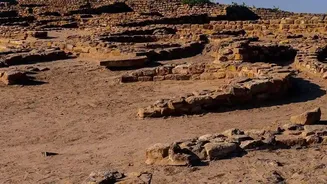
connecting central India with trade routes that brought wealth, ideas, and diverse cultures. Excavations since the mid-20th century have slowly peeled back layers of soil to reveal a meticulously planned city, including ancient markets, bathing houses, and extensive temple complexes, confirming its status as a vibrant urban hub.
The Masterpiece in Brick: Lakshmana Temple
The crown jewel of Sirpur is the 7th-century Lakshmana Temple, considered one of the finest surviving brick temples in India. Dedicated to Lord Vishnu, it was commissioned by Queen Vasata, the mother of King Mahashivagupta Balarjuna. The temple stands on a high stone platform, and its intricate door jamb features detailed carvings of Vishnu's ten avatars, reclining on the serpent Sesha, and scenes from daily life. The remarkable preservation of its carved brickwork offers a rare glimpse into the architectural genius of the era.
A Harmony of Faiths
What makes Sirpur truly unique is the peaceful coexistence of multiple religious traditions. Archaeological work has unearthed an incredible array of structures: 22 Shiva temples, 5 Vishnu temples, 10 Buddhist Viharas (monasteries), and 3 Jain Viharas. This confluence of Shaivism, Vaishnavism, Buddhism, and Jainism in one settlement is a testament to the region's historical tolerance and cultural syncretism. The famous Chinese traveler Xuanzang, who visited in the 7th century, noted the flourishing monastic life, and recent finds confirm Sirpur as a major centre for spiritual learning.
Exploring the Monastic Ruins
Among the most significant Buddhist sites are the Anand Prabhu Kuti Vihar and the Teevardev Vihara. These monastic complexes, featuring monks' cells, large courtyards, and central shrines, once housed thousands of scholars. Excavations have revealed colossal statues of the Buddha in the 'earth-touching' posture, along with exquisite bronze idols. The blending of Buddhist iconography with Hindu motifs, such as river goddesses on temple pillars, highlights a remarkable period of artistic and religious dialogue.
Planning Your Trip to the Past
Sirpur is located about 80 kilometres from Raipur, the capital of Chhattisgarh, making it an accessible day trip. The best way to reach it is by road, a journey of about an hour and a half to two hours via a national highway. The nearest major railway station is in Mahasamund, around 35 km away, and the closest airport is in Raipur. The ideal time to visit is between October and February, when the weather is pleasant for exploring the sprawling, open-air site. An archaeological museum near the Lakshmana Temple houses many of the precious relics found during excavations, providing further context to this incredible heritage landscape.