

The Science of the Lean
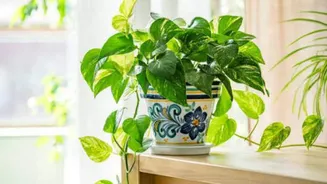
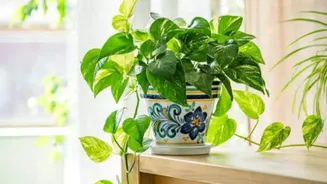
If you've noticed your indoor plants craning their necks toward a window, you've witnessed a process called phototropism. In simple terms, it's the natural ability of a plant to grow towards a light source. Think of it as a survival mechanism hardwired
into their DNA. Plants rely on light for photosynthesis, the process of converting light energy into food. When their primary light source is off to one side, like a living compass, they will actively bend and stretch to maximize their exposure and ensure they get the energy they need to thrive. This is especially noticeable in indoor settings where light is often directional and limited.
Meet the Growth Hormone: Auxin
The secret agent behind this movement is a plant hormone called auxin. Produced primarily in the growing tips of stems, auxin plays a crucial role in controlling cell elongation. When sunlight hits one side of a plant, the auxins migrate to the shaded side of the stem. This accumulation of auxin on the darker side stimulates the cells there to grow longer and faster than the cells on the sunny side. This uneven growth rate is what causes the stem to physically bend and lean towards the light source, giving you a lopsided plant.
The Simple Fix: Regular Rotation
Now that you understand the science, the solution becomes beautifully simple: rotate your plants. By regularly turning your plant, you ensure that all sides receive a relatively equal amount of light over time. This balances out the auxin distribution and encourages the plant to grow straight and symmetrically. How often should you do it? A good rule of thumb is to give your plant a quarter turn each time you water it. This small, consistent action is easy to remember and highly effective in preventing a permanent lean. For most plants, a quarter turn every week or two during the growing season (spring and summer) is sufficient.
Correcting an Existing Lean
What if your plant already has a significant tilt? Don't worry, it's often correctable. You can encourage it to straighten up by turning it 180 degrees, so the shaded, longer side is now facing the window. Over several weeks, the plant will work to rebalance its growth. However, for a very dramatic lean, a sudden 180-degree turn can be a bit of a shock. A gentler approach is to use several quarter turns over a few weeks to gradually correct its posture. This slow adjustment is less stressful for the plant.
Beyond the Turn: Other Light-Boosting Tips
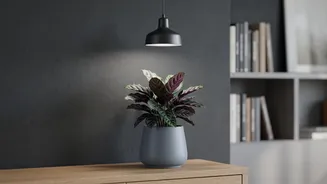
While rotation is key, you can take other steps to create an ideal light environment. If you want to keep a plant in a specific spot without turning it, you can supplement the light. Placing a grow light directly above the plant will promote even, upright growth and remove the need for rotation. Even a fluorescent light set up on the shady side can help balance things out. Another simple but effective tip is to keep your plant's leaves clean. Dust and grime can block light absorption, so gently wiping the leaves with a damp cloth allows them to photosynthesize more efficiently. Also, be mindful of drafts from windows or heaters, as extreme temperatures can also stress a plant and affect its growth.
When Not to Rotate
Believe it or not, there are a few instances where you should resist the urge to rotate. Some flowering plants, like orchids and Christmas cacti, should not be turned once they have set their buds. Changing their orientation to the light at this delicate stage can cause them to drop their buds before they have a chance to bloom. Once the flowering is over, you can resume regular rotation. Similarly, plants that have been specifically trained to climb or trail in a certain direction might have their arrangement disturbed by turning. For most leafy houseplants, however, rotation is a beneficial and necessary part of their care routine.