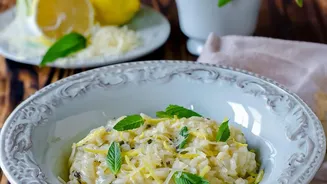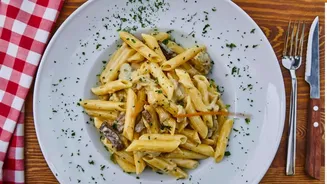






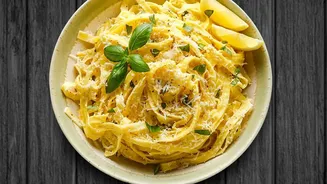
The Foundation: The Magic of 'Al Dente'
The journey to a perfectly balanced pasta dish starts with the pasta itself. The Italian term "al dente" literally translates to "to the tooth." It describes pasta that's cooked to be tender but still firm, offering a slight resistance when you bite into
it. This isn't just about tradition; it’s about texture and chemistry. Overcooked, mushy pasta can become gummy and fails to hold sauce properly. An al dente noodle, however, provides a satisfying chew that contrasts beautifully with a smooth sauce. Furthermore, stopping the cooking at the al dente stage is crucial for the sauce. As the pasta finishes cooking in the pan with the sauce, it releases surface starches. This starchy release, often boosted by a splash of the pasta's cooking water, is the secret to creating a silky, emulsified sauce that clings lovingly to every noodle instead of pooling at the bottom of the bowl.
The Richness: A Creamy Counterpoint
The 'creamy' element of the sauce provides the richness and luxurious mouthfeel that makes the dish so comforting. This richness primarily comes from fat, whether it's from heavy cream, butter, or even cheese like Parmesan. Fat is a brilliant carrier of flavor, helping to distribute the aromatic compounds from the garlic and lemon throughout the dish. However, a sauce that is only rich can feel heavy and overwhelming on the palate. Its role in this trio is to provide a decadent base that the other ingredients will balance. The cream coats the pasta, creating a smooth canvas, but without a counterpoint, it would be a one-note experience. This is where the other elements become not just important, but essential.
The Brightness: Lemon's Vital Role
If cream provides the rich bass note, lemon is the bright, high note that cuts through it and lifts the entire dish. Acidity is a fundamental pillar of flavor balancing. In the context of a creamy, fatty sauce, a squeeze of lemon juice provides a necessary contrast that prevents the dish from feeling heavy or greasy. It cleanses the palate with each bite, making the next one just as exciting as the first. The acid in lemon juice also has a chemical effect on cream, causing the dairy proteins to slightly thicken and create an even creamier texture. This dual action—balancing richness while enhancing texture—is why lemon is the undisputed star that brings vibrancy and freshness to the sauce.
The Aromatic Depth: The Nuance of Garlic
Garlic is the aromatic heart of the sauce, providing a pungent, savory depth that bridges the gap between the rich cream and the bright lemon. But the flavor of garlic is not monolithic; it changes dramatically based on how it's prepared and cooked. When chopped or minced, an enzyme reaction creates allicin, the compound responsible for garlic's signature sharp bite. When cooked gently in butter or oil, that sharpness mellows significantly, transforming into a sweeter, nuttier, and more complex aromatic flavor. High heat, conversely, can make it taste bitter. In a creamy lemon garlic sauce, the garlic is typically sautéed gently at the start. This coaxes out its sweet, savory notes, which then infuse the cream. This mellowed pungency provides a foundational flavor that is assertive enough to be noticed but soft enough not to overpower the delicate balance with the lemon.