






Off the sun-drenched coast of Turkey, the Mediterranean has given up a secret held for nearly five millennia. The discovery of a 4,700-year-old shipwreck is offering a rare glimpse into the dawn of global trade and life in the ancient world.
A 'Time Capsule' Uncovered
In the clear
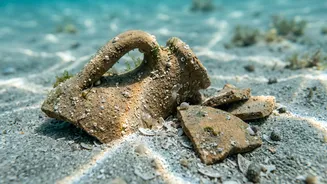
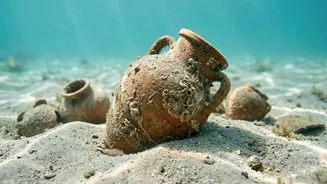
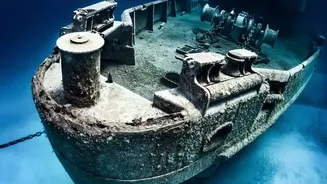
waters near Kekova Island, a site renowned for its submerged ruins, underwater archaeologists from Akdeniz University have made a monumental discovery. Initially documented in 2024, the site has now been identified as a shipwreck from the Early Bronze Age, dating back as far as 2700 BCE. That makes it a contemporary of the Great Pyramid of Giza. Led by Associate Professor Hakan Öniz, the team found the remnants of the vessel's cargo scattered on the seabed, about 30 metres below the surface. Though the ship's wooden hull has long since disintegrated, what remains has been dubbed a 'time capsule' offering direct physical evidence of a world that was becoming interconnected thousands of years ago.
Cargo That Tells a Story
The wreck’s story is told through its cargo: more than 30 ceramic storage jars, known as amphorae, and three large stone anchors. These are not just ordinary pots. The distinctive shape and flat-bottomed design of the amphorae are characteristic of pottery from the Early Bronze Age. Researchers believe they were used to transport valuable commodities like olive oil or wine. Clay analysis even suggests some of the vessels may have been crafted in workshops in the Jordan Valley, providing a crucial clue about the ship’s origins and the vastness of trade networks at the time. The find is significant because it provides rare physical proof of the sophisticated, long-distance trade routes that existed across the eastern Mediterranean nearly five millennia ago.
Rewriting Maritime History
This discovery could potentially rewrite the history books, as it may be the world's oldest known shipwreck. It predates the famous Uluburun wreck, another significant Bronze Age find in Turkey, by more than 1,500 years. While historical texts hinted at such ancient maritime commerce, physical evidence has been scarce. This Kekova wreck demonstrates that complex, organized sea trade was not a later innovation but a foundational element of Bronze Age civilizations. It helps us understand how materials, ideas, and cultures spread between the great powers of the era, from the Levant and Egypt to Anatolia and the Aegean.
Life Aboard an Ancient Vessel
The find also offers fascinating clues about daily life for these ancient mariners. One particularly unusual amphora with distinct markings and holes has led to a remarkable hypothesis: it may have been a churn for making butter or cheese at sea. This suggests that sailors on long voyages might have carried live animals, such as goats, for a steady supply of fresh milk. While just a theory, it paints a vivid picture of the resourcefulness required to navigate the seas thousands of years ago. These artifacts provide insight not just into cargo, but into the practical challenges and daily routines of the people who undertook these epic journeys.
The Work Ahead
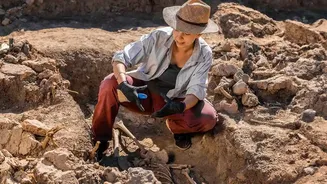
The work on the Kekova wreck has only just begun. The excavation, carried out by the Antalya Museum and scientifically supervised by Akdeniz University, is a painstaking process. Divers are operating at depths that limit their time on the seabed, carefully documenting and recovering artifacts. Researchers are now analyzing the residue found inside some of the miraculously preserved jars to confirm their contents. Each new piece of information will help piece together the puzzle of this ship: its precise route, its final destination, and the circumstances of its sinking. The ongoing investigation promises to keep revealing secrets about a pivotal moment in human history.