




A New Era of Private Spaceflight
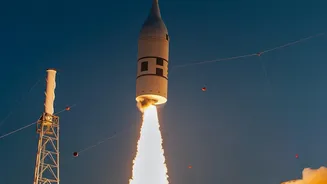
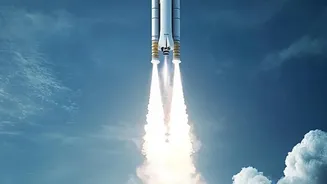
Just recently, India joined an exclusive club, becoming only the third nation after the US and China to have a private company successfully launch a rocket into orbit. Hyderabad-based startup Skyroot Aerospace achieved this historic milestone with its
Vikram-1 rocket, a mission dubbed 'Aagaman', or 'arrival'. Founded in 2018 by former ISRO scientists, Skyroot first made history in 2022 with the suborbital launch of Vikram-S, proving its core technologies. The successful orbital flight of Vikram-1 on July 18, 2026, was a monumental step, validating India's decision to open its space sector to private enterprise in 2020. This success has not only boosted investor confidence but also set the stage for the company's next, more ambitious project: the Vikram-2.
Understanding the Vikram-1 Baseline
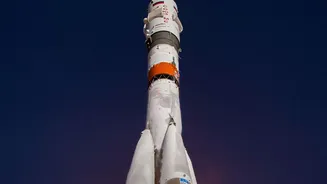
To appreciate the advancement that Vikram-2 represents, it's essential to understand its predecessor. The Vikram-1 is a small-lift launch vehicle designed to cater to the burgeoning small satellite market. Standing about 24 meters tall, the four-stage rocket is engineered to be a cost-effective solution for deploying satellite constellations. Its payload capacity is approximately 350 kg to Low Earth Orbit (LEO) and around 260 kg to a Sun-Synchronous Polar Orbit (SSPO), a popular destination for Earth observation satellites. Built using innovative techniques like carbon-composite structures and 3D-printed engines, Vikram-1 was designed to be the workhorse that established Skyroot's commercial launch services. Its successful 'Aagaman' mission proved the platform's reliability, carrying several customer payloads into a 450-km orbit.
The Power of Three: Vikram-2's Capabilities
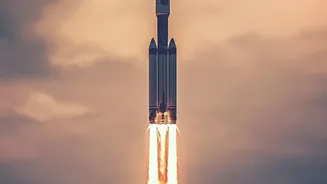
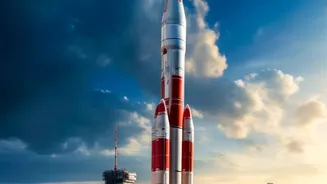
The Vikram-2 is where Skyroot’s ambitions scale up significantly. As the headline suggests, the rocket is designed to carry a much heavier load. While Vikram-1's LEO capacity is around 350 kg, the Vikram-2 is targeting a payload of up to 900 kg to LEO. This is nearly three times the capacity of its predecessor. For missions to the more demanding SSPO, the capacity increases from Vikram-1's 260 kg to an expected 600 kg for Vikram-2. This substantial increase in power is enabled by more advanced and powerful engine technology, including a cryogenic upper stage powered by the Dhawan-series engine. This move from a small-lift to a medium-lift rocket class opens up a much wider segment of the launch market for Skyroot.
Why Heavier Payloads Matter
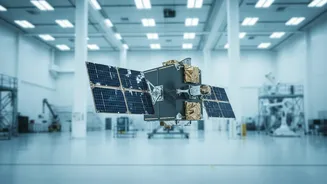
The leap in payload capacity is more than just a technical achievement; it's a strategic business move. A 900 kg capacity allows Skyroot to compete for more lucrative contracts. It means the company can launch larger, more complex single satellites or deploy a greater number of small satellites in a single mission for constellation operators. This 'rideshare' capability is crucial in a market where companies are launching dozens or even hundreds of satellites to build out global networks for communication and Earth observation. Furthermore, the enhanced power and cryogenic upper stage of Vikram-2 will offer multi-orbit deployment, allowing different payloads on the same flight to be placed into their specific, desired orbits. This flexibility makes the launch service far more attractive to a diverse range of international clients, positioning India as a more versatile and competitive player in the global space economy, which is projected to grow to $44 billion by 2033.
The Path to Launch
While the specifications are impressive, Vikram-2 is still under development. Skyroot Aerospace has been methodically testing the components that will power this next-generation rocket. The company has successfully test-fired its Dhawan cryogenic engine, which is critical for the Vikram-2's performance. The maiden flight for Vikram-2 is currently targeted for 2027. Between now and then, the company will continue its developmental flights for Vikram-1 to establish a reliable launch cadence and prepare its manufacturing facilities for increased production. Building on the momentum from Vikram-1's success and its status as India's first space unicorn, Skyroot is focused on turning its technological prowess into a sustainable commercial enterprise. The journey from the drawing board to the launchpad for Vikram-2 will be a critical test of this transition.