








An Engine Forged From Ambition
It all began with a sketch on an envelope. In the late 1990s, then-Volkswagen Group chairman Ferdinand Piëch envisioned an engine unlike any other, one that would power a car capable of achieving things no road car had before. His mandate was ruthless:
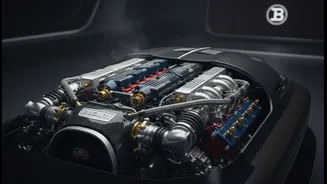
a car with over 1,000 horsepower that could surpass 400 km/h but remain civilized enough for a trip to the opera. The result, after years of intense development, was the 8.0-litre, quad-turbocharged W16. Essentially two V8 engines fused together, this behemoth was an audacious statement of intent. When it debuted in the 2005 Bugatti Veyron, it immediately created a new category of vehicle: the hypercar. It was more than an engine; it was a declaration that the laws of automotive physics were about to be rewritten.
A Legacy of Shattered Records
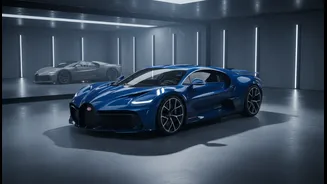
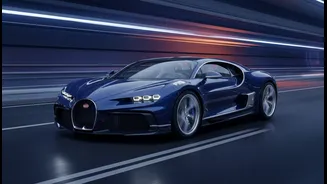
The W16 didn't just meet expectations; it obliterated them. From the Veyron to the Chiron, this engine was the heart of Bugatti's assault on the record books. The Veyron became the fastest production car in the world, and its successors just kept pushing the benchmark higher. The Chiron Super Sport 300+ famously broke the 300-mph barrier in 2019, a speed once thought impossible for a road-legal vehicle. Over its 20-year run, the engine was continually refined, with power outputs climbing from an initial 1,001 PS to over 1,600 PS in its final forms. Each new Bugatti model was a testament to the W16's incredible versatility and the engineering team's ability to extract ever more performance from the quad-turbocharged monster. It became the brand's signature, an icon of an era of peak internal combustion.
The Mistral: A Final, Open-Air Symphony
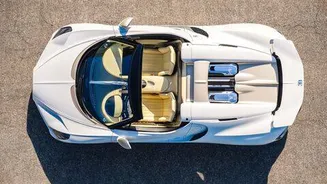
Every great performance deserves a grand finale. For the W16, that finale is the Mistral. Not just a convertible Chiron, the Mistral is a bespoke roadster designed as the engine's open-top swansong. Limited to just 99 units, each with a starting price of €5 million, the entire production run was sold out before it was even officially revealed. The Mistral uses the ultimate evolution of the W16, producing a staggering 1,600 PS. It even claimed one last record for the engine, becoming the world's fastest open-top production car in late 2024 with a verified speed of 282 mph (453.91 km/h). With the recent completion of the 99th car, the final chapter of the W16's road-going story has now officially closed.
The Future is Electrified
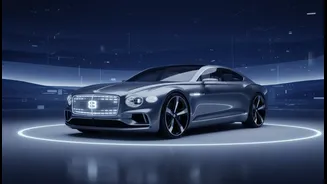
So, why say goodbye to such a successful and iconic engine? The answer lies in the future of the automotive world and Bugatti's new direction. With the company now part of a joint venture with electric hypercar specialist Rimac, a shift in philosophy was inevitable. Stricter emissions regulations and a market-wide pivot towards electrification mean that a massive, fuel-hungry engine like the W16 is an engineering marvel from a closing era. The decision to retire it signals Bugatti's commitment to evolving its definition of ultimate performance. The end of the W16 isn't just about one engine; it represents a broader transition for the entire high-performance industry, moving from pure combustion power to a new hybrid and electric age.
A New V16 Dawn in Molsheim
The end of one legend marks the beginning of another. Bugatti is not abandoning its pursuit of multi-cylinder greatness. Its next chapter will be written by the Tourbillon, a new hypercar powered by an entirely new, naturally-aspirated V16 engine. Developed with help from Cosworth, this new V16 will be part of a sophisticated hybrid powertrain, augmented by three electric motors. The goal is to retain the emotional, auditory thrill of a large-displacement engine while leveraging electric power to achieve new levels of performance. It's a bold strategy that aims to blend the best of both worlds, proving that even as the company embraces the future, the spirit of boundary-pushing engineering that defined the W16 era is very much alive.