


The Cardio and Calorie Question
If your primary goal is cardiovascular fitness and burning calories, cycling has a clear edge. A vigorous bike ride can burn anywhere from 500 to over 800 calories per hour, depending on your speed and intensity. This makes it an excellent choice for
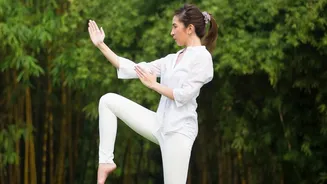
weight management and strengthening your heart through aerobic exercise. In contrast, Tai Chi is a low-impact activity. An hour of this gentle, flowing martial art burns roughly 240 to 356 calories, similar to a brisk walk. While it is considered a moderate aerobic activity that improves circulation, its main strength isn't high-intensity calorie burn. However, some studies have shown Tai Chi to be surprisingly effective, even more so than some aerobic exercises like cycling, at lowering blood pressure in individuals with prehypertension.
Space, Cost, and Convenience
Your living situation and budget play a huge role in this decision. Cycling requires a significant investment upfront—a bicycle, helmet, and potentially other gear. You also need a safe place to ride, which can be a challenge in congested urban areas, or space at home for a stationary bike. Tai Chi, on the other hand, is one of the most accessible forms of exercise. It requires no special equipment and can be practised in a small indoor space or a quiet corner of a park. You can learn from free online videos, though joining a class is recommended to get the form right. This makes Tai Chi an excellent option for those with limited space or a smaller budget.
Impact on Joints and Injury Risk
For those with joint pain or concerns about high-impact stress, Tai Chi is often the superior choice. It is a low-impact practice known for being gentle on the knees, hips, and spine. Its slow, controlled movements are designed to improve flexibility and strength without straining the body, making it ideal for all ages and fitness levels, including seniors. Cycling is also considered low-impact compared to activities like running. However, improper bike fit or poor form can lead to strain on the knees or back. While it strengthens leg muscles, Tai Chi's focus on whole-body coordination and balance can be more beneficial for overall stability and fall prevention.
The Mind-Body Connection
Both activities can be meditative, but in different ways. Cycling, with its rhythmic pedalling, can induce a state of 'flow' that helps clear the mind and reduce stress. Riding outdoors also provides the mental health benefits of being in nature. Tai Chi is often described as “meditation in motion.” The practice explicitly focuses on the mind-body connection, requiring deep concentration on breath, posture, and the slow, deliberate flow of movements. This emphasis on mindfulness is highly effective for reducing stress and improving mental clarity. Studies have shown it can reduce anxiety and promote a sense of calm.
Finding Your Community
Your preference for solo or group activity can also guide your choice. Cycling can be a solitary pursuit, offering time for personal reflection. It also has a strong social component, with numerous cycling clubs and group rides providing a sense of community and shared motivation. Similarly, Tai Chi can be practised alone at home. However, it is often taught in group classes, which fosters a supportive environment where participants can learn from an instructor and each other. This shared experience can be a powerful motivator for sticking with the practice.