







From Nature to Your Kitchen
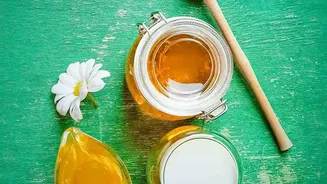
Understanding where these sweeteners come from is the first step in comparing them. Honey is a natural product made by bees from the nectar of flowers. The bees collect nectar, process it, and store it in their hives, where it matures into the thick,
sweet liquid we know as honey. Its flavour, colour, and even nutritional profile can vary widely depending on the flowers the bees visited. Table sugar, on the other hand, typically comes from sugarcane or sugar beets. It undergoes a significant refining process that involves extracting the juice, purifying it, and crystallizing it to produce the familiar white granules of sucrose. This process strips away virtually all other nutrients, leaving behind pure sweetness.
The Calorie and Composition Breakdown
At a glance, honey seems to pack a heavier punch. A tablespoon of honey contains about 64 calories, while a tablespoon of sugar has around 49. However, this doesn't tell the whole story. Honey is denser and contains water, while granulated sugar is pure carbohydrate. More importantly, honey is generally sweeter than sugar, primarily due to its higher concentration of fructose. This means you might need less honey to achieve the same level of sweetness, potentially evening out the calorie difference in practice. Chemically, table sugar is 100% sucrose, a molecule made of 50% glucose and 50% fructose bonded together. Honey, by contrast, is composed of separate glucose and fructose molecules, along with about 20% water and small amounts of other substances.
How They Affect Your Blood Sugar
The Glycemic Index (GI) is a measure of how quickly a food raises blood sugar levels. This is where a clearer difference emerges. Table sugar has a GI of around 65, which is considered moderate to high. The GI of honey varies depending on its composition but typically falls between 50 and 58, which is in the low to moderate range. This means honey tends to raise blood sugar levels a bit more slowly than sugar does. The reason lies in its higher fructose content. Fructose has a very low GI, which helps lower the overall index of honey. However, it's crucial to remember that this is a relative difference. Both sweeteners are high in sugar and will cause a significant increase in blood sugar, especially when consumed in large amounts. For individuals managing their blood sugar, neither is a 'free pass'.
Beyond Sweetness: The Nutrient Edge
This is where honey truly separates itself from sugar. Table sugar is often described as providing 'empty calories' because the refining process removes all vitamins, minerals, and other compounds, leaving only sucrose. It offers energy but no other nutritional value. Honey, on the other hand, retains some of the goodness from its plant origins. It contains trace amounts of minerals like potassium, calcium, and iron, as well as B vitamins. More significantly, honey is a source of antioxidants, including flavonoids and phenolic acids, which are compounds that can help protect the body from cell damage. Raw, unpasteurized honey in particular is also known for its natural antibacterial and anti-inflammatory properties, which is why it has been used for centuries as a folk remedy for sore throats and wounds.
The Verdict for Your Daily Use
So, which one should you choose? While honey has a slight nutritional edge over table sugar, it is not a health food. Both are considered 'added sugars' by nutrition experts, and high consumption of either is linked to weight gain, type 2 diabetes, and other health issues. The decision often comes down to your priorities and intended use. If you are simply sweetening your tea or baking a cake where flavour is neutral, the difference may be minimal. However, if you appreciate the unique flavour profiles of different honeys and want the small bonus of antioxidants and other trace nutrients, honey is the superior choice. Its potential soothing properties also make it a better option for a cough or sore throat. Ultimately, the most important factor is not which sweetener you choose, but how much of it you use. Moderation remains the golden rule.