








The Courage of Saffron
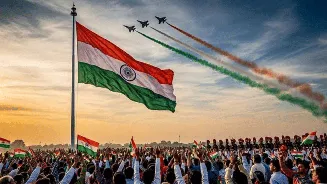
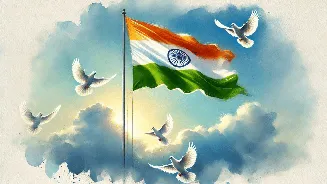
The topmost band of the Indian flag is saffron, or 'Kesari'. This colour holds deep cultural and historical significance in the subcontinent. Officially, it represents strength and courage. When the flag was adopted, Dr. Sarvepalli Radhakrishnan, a philosopher
who became India's second President, explained that the saffron colour denotes renunciation or disinterestedness. He suggested that the nation's leaders must be indifferent to material gains and dedicate themselves wholly to their work. This interpretation elevates the colour beyond mere bravery to a higher call for selfless service, reflecting a spirit of sacrifice that was central to the freedom struggle.
The Purity of White
In the middle of the Tiranga is a band of white, which signifies peace, truth, and purity. According to Dr. Radhakrishnan's interpretation in the Constituent Assembly, the white in the centre is light, representing the path of truth that must guide the nation's conduct. This band acts as the backdrop for the Ashoka Chakra and serves as a constant reminder of the importance of honesty and transparency in both public and private life. It calls for a clear and fair-minded approach to national progress, underscoring the idea that genuine growth can only be achieved through righteous means.
The Vibrancy of Green
The final band at the bottom of the flag is India Green. This colour symbolises the nation's deep connection to the soil and its agricultural roots. It represents faith, fertility, growth, and the overall prosperity of the land. As a nation where agriculture has long been the backbone of the economy and society, the green band reflects a respect for nature and the environment upon which all other life depends. It stands for the vibrancy and auspiciousness of the land, reminding citizens of the foundation upon which the nation's progress is built.
The Wheel of Righteous Progress
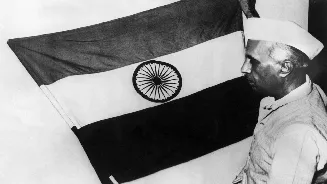
At the heart of the flag, within the white band, is the Ashoka Chakra, a 24-spoke wheel in navy blue. This emblem replaced the spinning wheel (Charkha) from earlier versions of the flag. The Chakra is the 'wheel of law' or 'Dharma Chakra' taken from the Lion Capital of Emperor Ashoka. It symbolizes righteousness, justice, and forward movement. Jawaharlal Nehru noted that the wheel is a symbol of India's ancient culture and its dynamism. Dr. Radhakrishnan explained that the wheel denotes motion, reminding us that there is life in movement and death in stagnation; India must move forward. The 24 spokes represent 24 virtues or the 24 hours of the day, signifying the constant and disciplined pursuit of progress.
From Swaraj to a Sovereign Symbol
The journey to the final design of the Tiranga was an evolution. Early versions, like the one proposed by Pingali Venkayya in 1921, had different colours and a spinning wheel to represent Mahatma Gandhi's call for self-reliance. Initially, the colours had religious associations, but to foster unity, they were later officially assigned secular meanings: courage and sacrifice, peace and truth, and faith and chivalry. On July 22, 1947, the Constituent Assembly formally adopted the current design. The resolution, moved by Jawaharlal Nehru, presented the flag not as a symbol of domination, but as one of freedom and a guide for the newly independent nation.