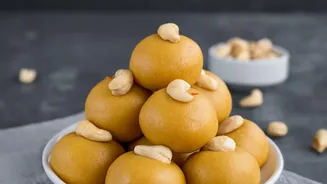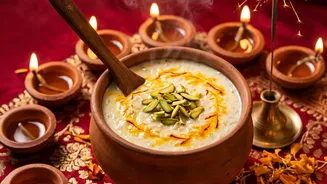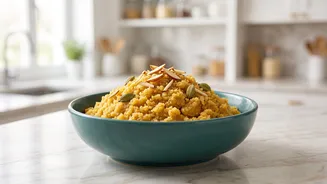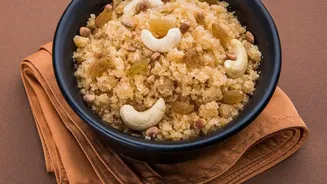


After the vibrant chaos of Diwali, the body often craves comfort. Enter Besan Sheera, a warm, ghee-laden sweet that's part dessert, part hug in a mug. But perfecting this gram-flour delight hinges on two crucial steps: roasting and texture.
A Comforting Post-Festive Ritual
Besan Sheera
is more than just a sweet; for many, it's a cherished ritual, especially in the days following Diwali. After a period of rich, heavy, and often fried festive foods, this simple, warm dish is seen as a restorative and soothing preparation. In many North Indian households, particularly in Punjabi families, it’s a go-to home remedy for the coughs and colds that can accompany the changing season. The combination of ghee, roasted gram flour, and warm milk is believed to soothe a scratchy throat and provide comfort. Whether viewed as a dessert or a gentle remedy, its role is to nourish and restore balance after the grand celebrations.
Mastering the 'Bhoonna': The Art of Roasting
The heart of a perfect Besan Sheera lies in the 'bhoonna', or the roasting process. This step cannot be rushed. The goal is to cook the raw gram flour (besan) in ghee over a consistently low flame. Roasting on high heat will brown the flour quickly but leave it tasting raw and unpleasant. Patience is key; you must stir continuously for about 15-20 minutes. You will know the besan is perfectly roasted by using your senses: the colour will change from a pale yellow to a beautiful golden-brown, and your kitchen will fill with a rich, nutty aroma. This slow-roasting process is what gives the sheera its characteristic deep flavour and ensures it doesn't taste pasty.
The Importance of Quality Ingredients
With a recipe this simple, the quality of your ingredients makes all the difference. Using fresh, fine gram flour is crucial for achieving a smooth, lump-free final product. Don't skimp on the ghee; using a good quality desi ghee is essential for the classic richness, glossy texture, and unforgettable aroma. The ratio of ghee to besan is important, as besan is naturally dry and absorbs a lot of fat. Too little ghee can result in a dry, pasty halwa rather than the luscious, melt-in-your-mouth texture you're aiming for. These foundational elements are what elevate the dish from good to exceptional.
Achieving the Perfect Silky Texture
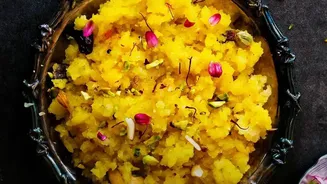
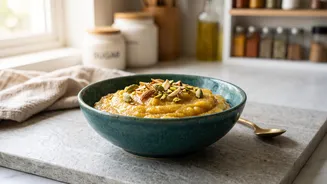
The second critical moment in making sheera is adding the liquid. This is where lumps can form if you're not careful. The trick is to add warm milk or water to the roasted besan mixture slowly and in a steady stream, while whisking continuously. Some cooks even turn off the heat while combining the liquid and the flour mixture to prevent splattering and clumping. The final consistency is a matter of personal preference. For a thicker, spoonable dessert akin to halwa, you'll cook it longer until the ghee starts to separate from the sides of the pan. For a more drinkable, comforting 'sheera' consistency, you'll use more liquid and cook it for a shorter time until it resembles a thick, flowing custard.
Finishing Touches and Serving
The sweetener, whether it's sugar or jaggery, should be added after the besan is cooked and the liquid has been incorporated. Cooking it for a few more minutes allows the sugar to dissolve completely and integrate into the sheera, giving it a glossy finish. The final flourish comes from fragrant spices. A pinch of ground cardamom is classic, while some recipes also include turmeric and a tiny bit of black pepper, especially when it's being made as a remedy. Garnish with slivered almonds or pistachios for added texture and richness. Besan Sheera is best served immediately while it's hot and comforting, as it tends to thicken considerably as it cools.