
Know Before You Go: Essential Tips
Navigating Kolkata during Durga Puja is an experience in itself. The city’s transport system adapts to the festivities, with the Metro running almost all night on the main Puja days (Saptami, Ashtami, Navami). This is your most reliable option for covering
long distances, especially between North and South Kolkata. For shorter hops, auto-rickshaws and special Puja buses are available, but be prepared for diverted routes and traffic near major pandals. Comfortable footwear is non-negotiable, as you will be walking for kilometres. Start pandal hopping early in the morning (around 7 AM) or very late at night (after 1 AM) to avoid the thickest crowds.
Day 1: Tradition and Heritage in North Kolkata
Begin your journey in the city’s historic heartland. North Kolkata is famed for its traditional 'sabeki' Pujas and the ancestral homes of the old aristocracy, known as 'Bonedi Baris'. Start your day with a visit to Sovabazar Rajbari, one of the most famous Bonedi Baris, to witness rituals that have remained unchanged for centuries. From there, explore the nearby community pandals like Bagbazar Sarbojanin, which is one of the oldest and most revered. A walk through Kumartuli, the potters' quarter, is a must. Here, you can see the artists' workshops where the magnificent clay idols are crafted. The narrow lanes and old-world charm of the north offer a deep dive into the cultural roots of the festival.
Day 2: Spectacle and Artistry in South Kolkata
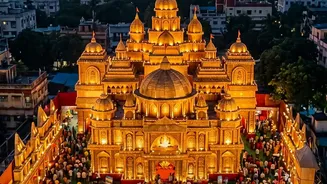
If North Kolkata is about tradition, the South is a canvas for artistic innovation. This part of the city is known for its grand, theme-based pandals, where organisers compete to create the most spectacular and imaginative installations. Plan your evening around a specific cluster to avoid getting stuck in traffic. For example, you can explore the Gariahat area, which includes popular pandals like Ekdalia Evergreen and Singhi Park. Another popular circuit includes Chetla Agrani and Suruchi Sangha in New Alipore, both renowned for their artistic merit and massive crowds. Be ready for long queues, but the breathtaking creativity on display, from intricate replicas of world landmarks to thought-provoking social commentaries, makes it worth the wait.
Day 3: A Feast for the Senses
Durga Puja is as much a culinary festival as it is a religious one. Kolkata’s streets transform into a massive food court. Don’t miss out on classic street foods like phuchka, kathi rolls, and ghugni from the countless stalls set up near pandals. For a more substantial meal, many restaurants offer special Puja menus, or 'Pujor Bhoj', featuring Bengali delicacies like kosha mangsho (slow-cooked mutton curry), bhetki paturi (fish steamed in banana leaves), and of course, biryani. No meal is complete without sweets; indulge in rosogolla, sandesh, and mishti doi (sweet yogurt). Many community pandals also serve 'bhog'—a traditional offering of khichuri and mixed vegetables—which is a quintessential Puja experience.
The Finale: Sindoor Khela and Immersion
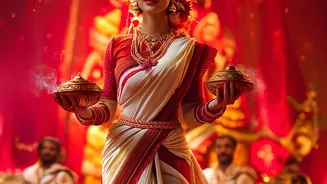
The festival culminates on Vijaya Dashami with two powerful rituals. In the morning, married women participate in 'Sindoor Khela', where they smear each other with red vermilion powder, wishing for a happy married life. Later in the day and evening, massive processions carry the idols to the Hooghly River for immersion, or 'Bhasan'. The atmosphere is a mix of celebration and melancholy as devotees bid farewell to the Goddess. The main immersion ghats, like Babughat and Baghbazar Ghat, are crowded but offer a deeply moving spectacle of music, dance, and devotion as the idols are returned to the water.