




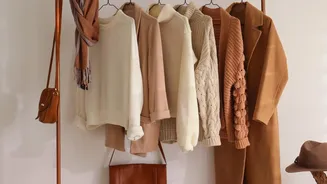
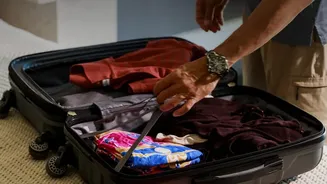
The Core Concept: From Outfits to Combinations
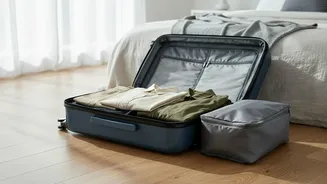
Most travellers make a critical error: they pack in outfits. An outfit for sightseeing, one for dinner, another 'just in case'. The problem is that these items are mentally siloed and rarely get mixed. The five-part rule, often called the '5-4-3-2-1 Method',
shifts your mindset from rigid outfits to versatile combinations. Instead of planning for specific days, you pack a curated collection of items designed to work together in multiple ways. The goal is not to have more clothes, but to have better, more versatile options. By focusing on complementary pieces, a small selection of garments can generate a surprising number of unique looks, lightening your luggage and your decision fatigue.
The 5: Tops and Shirts
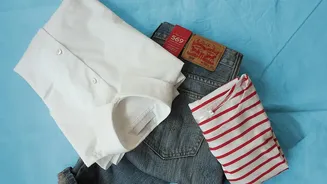
The foundation of this method starts with five tops. This is your chance to pack variety in terms of style, colour, and function. Think a mix of casual t-shirts, a smart blouse, a comfortable long-sleeve top, and perhaps a stylish tank. The crucial element here is that each of these five tops should coordinate with all of your chosen bottoms. This is what unlocks the combinatorial magic. Opt for fabrics that are comfortable, resist wrinkling, and can be easily layered. A simple, well-fitting tee can be paired with jeans for a day of exploring or tucked into a skirt for a more polished evening look, giving each piece maximum utility.
The 4: Versatile Bottoms
Next, select four bottoms. This category typically includes trousers, jeans, skirts, or shorts. Your choices should be driven by your destination's climate and your planned activities. A classic selection for a week-long trip might include one pair of dark-wash jeans, one pair of comfortable trousers or chinos, one skirt, and a pair of smart shorts. The key, again, is versatility and coordination. Choosing bottoms in neutral colours like black, navy, beige, or olive green ensures they will work with every top you've packed, instantly multiplying your outfit possibilities.
The 3: Shoes and Layers
This part of the rule can have slight variations, but a highly practical interpretation is three key items that can include both shoes and layering pieces. For shoes, think in terms of activity: one pair for walking (comfortable sneakers or flats), one pair that is a bit dressier for evenings (like loafers or sandals), and a third specific to your trip (like hiking boots or heels). For layers, a versatile jacket, a cardigan, or a shawl are excellent choices. These items can completely change the look of an outfit while providing practical warmth for cool evenings or air-conditioned interiors. A lightweight wrap, for instance, can serve as a blanket on the plane and a chic accessory for dinner.
The 2 and 1: Bags and Accessories
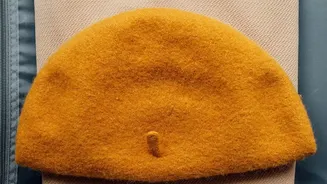
Finally, the rule narrows to the most essential extras. 'Two' often refers to bags—a practical day bag or backpack for exploring, and a smaller clutch or crossbody bag for evenings out. 'One' is the catch-all for your key accessory. This could be one hat, one watch, or one statement piece of jewellery like a scarf or necklace that can elevate multiple outfits. Some interpretations of the rule use these numbers differently, such as for two dresses and one swimsuit, proving the formula's flexibility. The principle remains the same: identify the essential, high-impact items that round out your wardrobe without adding bulk.