






A 'Super-Earth' of Great Interest
Located about 49 light-years away, LHS 1140 b is what astronomers call a 'super-Earth'. It's a rocky planet roughly 1.7 times the size of our own world and about 5.6 times as massive. Since its discovery in 2017, it has been a top-tier candidate in the search
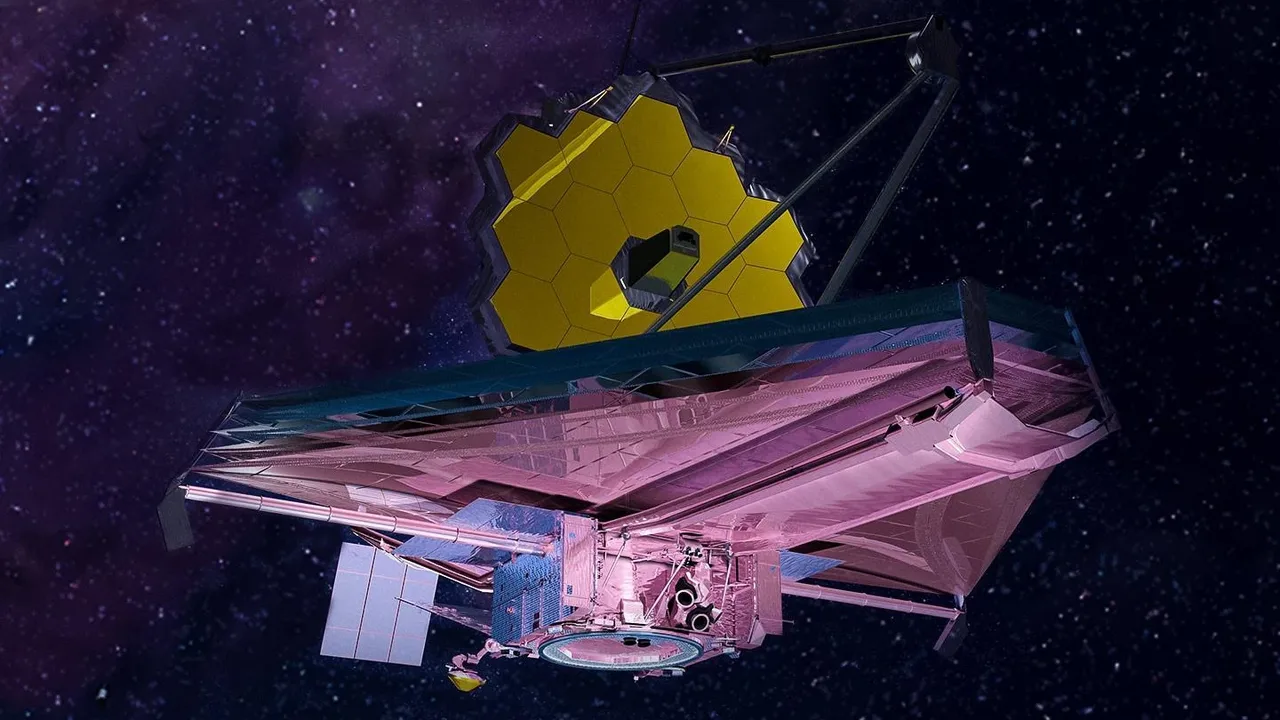
for life beyond our solar system. The reason for this excitement is its location: it orbits within the 'habitable zone' of its star, a cool red dwarf. This is the so-called 'Goldilocks' region where temperatures are just right, potentially allowing liquid water to exist on the planet's surface, a key ingredient for life as we know it. Early studies suggested it could be a dense, rocky world, but more recent data from 2023 and 2024 using the James Webb Space Telescope (JWST) have refined this picture, ruling out a hydrogen-rich atmosphere and pointing towards it being a water world.
The Scientific Prediction
Science isn't just about looking; it's about predicting what you'll see. Years before the latest results, scientists developed theoretical models to understand what kind of atmosphere a planet like LHS 1140 b could have. Based on its size, its distance from its star, and the star's radiation, a model developed by Collin Cherubim at Harvard University predicted that if the planet had an atmosphere, it should be slowly leaking helium into space. This helium would be a tracer gas, a tell-tale sign of a more substantial atmosphere hiding below. The prediction was a crucial test: finding this specific signal would not only prove an atmosphere existed but would also validate the complex computer models used to guess the conditions on these distant worlds.
A New Observation Confirms the Theory
In a study published in the journal Science on July 16, 2026, astronomers announced they had found exactly what the model predicted. Using the Magellan Clay Telescope in Chile, they observed LHS 1140 b as it passed in front of its star. The starlight filtering through the planet's outer layers carried an unmistakable signature: the absorption of light by helium atoms, proving the gas was escaping from the planet. This was hailed as the first confirmed detection of an atmosphere around a rocky planet in its star's habitable zone. The discovery was made even more compelling because another planet in the same system, which also passed in front of the star, showed no such signal, highlighting that LHS 1140 b is special.
Why This Validation Is a Game-Changer
Finding an atmosphere is exciting, but the real victory here is the validation of the prediction. It demonstrates that our understanding of how planets and their atmospheres evolve is on the right track. This success means scientists can now use their models with greater confidence to screen thousands of other known exoplanets. It allows them to prioritize which worlds are the most promising candidates for follow-up observations with powerful instruments like the JWST. Instead of searching blindly, they can focus their limited and expensive telescope time on planets that their validated models suggest have the highest chance of retaining an atmosphere. This breakthrough is less about finding one atmosphere and more about refining the entire process of searching for habitable worlds.