


A New Type of Cosmic Object
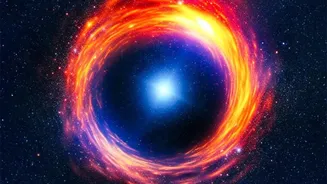
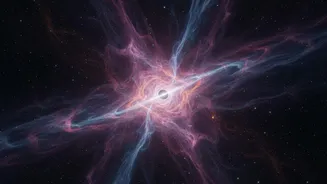
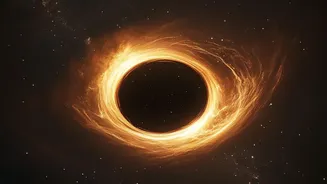
Astronomers at the Massachusetts Institute of Technology (MIT) and other institutions have identified what they are calling a “black hole star.” This object, formally named MoM-BH-1, was discovered using NASA's James Webb Space Telescope (JWST) and looks
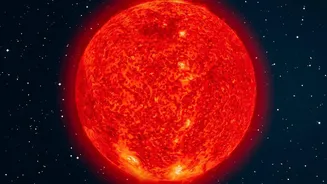
like an enormous star, possibly as large as our entire solar system. However, it emits about 100 billion times more energy than any single star could physically produce. That level of energy output is more typical of a supermassive black hole actively feeding on surrounding material. This strange combination of star-like appearance and black-hole-like power suggests it is a mashup of the two, an entirely new addition to the cosmic catalogue.
What is a 'Black Hole Star'?
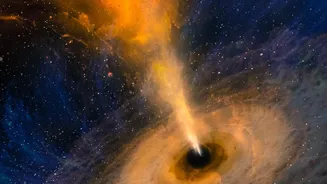
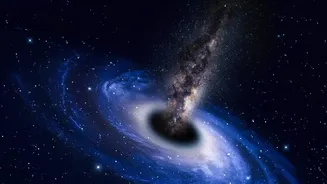
This isn't a star in the traditional sense, powered by nuclear fusion at its core. Instead, scientists believe MoM-BH-1 is a gigantic, dense cloud of hydrogen gas with a powerful black hole buried deep inside. This central black hole is estimated to be about 100,000 times the mass of our sun. As gas and dust fall toward this black hole, immense energy is released. This energy heats the vast, surrounding cocoon of gas, causing it to glow brightly, mimicking the appearance of a star's atmosphere, or photosphere, but on a much grander scale. In essence, the black hole acts as the engine, playing the role that nuclear fusion would in a normal star.
The Clues in the Light
The discovery was prompted by the object's very unusual color. It appeared as an extremely bright red dot in images from the JWST, a sign that its light was unique. When the team analyzed the light spectrum, they found features that ruled out ordinary stars. The light signature showed a sharp drop-off at a specific wavelength, known as a 'Balmer break,' which was the strongest ever recorded for a distant object. This indicates the presence of an incredibly dense envelope of hydrogen gas. Furthermore, the light contained almost no trace of elements heavier than hydrogen and helium, setting it apart from typical stars and galaxies. This combination of clues led the researchers to model the object as a gas-enshrouded black hole.
Solving the Mystery of 'Little Red Dots'
The discovery of MoM-BH*-1 may also solve a nagging puzzle that emerged shortly after the JWST began its operations: the appearance of numerous 'little red dots' scattered across images of the early universe. Scientists have debated what these objects could be since 2022. If the 'black hole star' model is correct, many of these mysterious red dots could be the same type of object — nascent, supermassive black holes hidden inside their gassy stellar cocoons. These objects seem to be common in the early universe but disappear over time, suggesting they are a specific phase in cosmic evolution. This finding provides a testable theory for astronomers to explore as they continue to study these enigmatic specks of light from cosmic dawn.