




1. St. John in the Wilderness Church
One of the very first structures in the new settlement, this church tells the story of Nainital's beginnings. Its foundation was laid in 1844, just a few years after Barron's arrival. The name came from the Bishop of Calcutta, who had to stay in an unfinished
hut in the forest while overseeing the church's establishment, calling it his home in the 'wilderness'. Built in a solemn neo-Gothic style amidst deodar trees, it served the growing European population of soldiers and officials seeking refuge from the heat of the plains. The church also holds a brass plaque memorializing the victims of the devastating 1880 landslide, a pivotal event in the town's history.
2. Gurney House
This charming cottage, built in 1881, offers a glimpse into the life of early European residents, most famously the hunter-conservationist Jim Corbett. Corbett lived here for a significant part of his life before leaving for Kenya in 1947. The house itself was constructed from the salvaged materials of a home destroyed in the 1880 landslide, a practical approach typical of early hill station life. Today, the privately-owned house preserves much of Corbett's furniture and belongings, acting as a time capsule of the era when British families established a distinct lifestyle in the Kumaon hills.
3. Government House (Raj Bhavan)
If any building symbolizes Nainital's peak importance, it is the magnificent Government House, now called Raj Bhavan. Built between 1897 and 1899, it was designed to be the summer residence of the Governor of the United Provinces, effectively making Nainital the region's summer capital. Designed in a grand Victorian Gothic style resembling a Scottish castle, it was a clear statement of administrative power and prestige. With 113 rooms, sprawling grounds, and its own golf course, it represented the pinnacle of the British colonial establishment in the hills, a world away from the initial rugged settlement.
4. The Old Secretariat
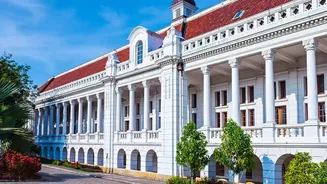
Running a summer capital required a significant administrative setup. The Old Secretariat building, completed in 1900, was the engine room of the government during its summer shift to the hills. This impressive building, which now fittingly houses the Uttarakhand High Court, was where the policies and paperwork of the United Provinces were handled for half the year. Its construction, alongside the Government House, marked the formalisation of Nainital's role from a mere resort to a centre of governance, attracting bureaucrats and professionals and changing the town's social fabric.
5. Balrampur House
The British were not the only ones building grand summer homes. As Nainital’s fame grew, Indian royalty began to emulate the colonial elite, establishing their own retreats. Balrampur House, built in the 1890s as the summer palace for the Maharaja of Balrampur, is a prime example. Designed in the style of a French château, it showcased the increasing presence of Indian princes in the hill station's social life. These royal residences added a new layer to the town's architectural and cultural landscape, blending Indian aristocratic flair with European resort culture.
6. The Nainital Yacht Club
The British didn't just work in Nainital; they played here, too. The establishment of the Nainital Yacht Club in 1910 formalised the sailing that had been happening on the lake since the 1880s. At over 2,000 metres, it is one of the highest yacht clubs in the world. The club, with its fleet of 'Linton Hope Half-Rater' yachts specially designed for the lake's conditions, became the centre of social and recreational life for the colonial residents. It cemented the idea of Nainital as a place of leisure and sport, a quintessential feature of the hill station experience.
7. The Grand Hotel
With the influx of officials, families, and royalty came the need for sophisticated accommodation. The Grand Hotel, with its classic colonial facade facing the lake, catered to this growing demand for tourism. While many early visitors stayed in private bungalows or boarding houses, the emergence of grand hotels marked Nainital’s development as a full-fledged travel destination. These establishments provided the comforts and social spaces expected by European and wealthy Indian travellers, moving beyond a simple retreat to a commercial resort town with a thriving hospitality industry.