






A New Leader in the Skies
In a historic first since its opening in 2001, Seoul’s Incheon International Airport has secured the top spot for international passenger traffic. According to preliminary statistics from Airports Council International (ACI), Incheon handled an impressive
38.39 million international passengers in the first half of 2026. This achievement pushes it ahead of perennial frontrunners like London Heathrow, which recorded 37.79 million passengers, and Singapore's Changi Airport with 34.53 million. Notably, Dubai International Airport, a dominant force for over a decade, has fallen out of the top five, underscoring the magnitude of this shift. Incheon's journey to the top has been a steady climb, rising from 10th place in 2002 to third by 2024 before finally capturing the lead.
The Geopolitical Tailwind
Incheon's ascent was fueled by a unique combination of factors, including significant geopolitical shifts. Ongoing conflict in the Middle East has reportedly weakened the transfer functions of major hubs like Dubai. This disruption has diverted a considerable flow of transfer passengers, particularly on European routes, towards East Asian alternatives. Incheon became a primary beneficiary, with transfer passengers increasing by 18.1 percent in the first half of the year. Traffic on European routes saw a particularly dramatic surge of 63.2 percent, demonstrating how global instability can redraw major air corridors almost overnight.
Strategic Expansion Meets Surging Tourism
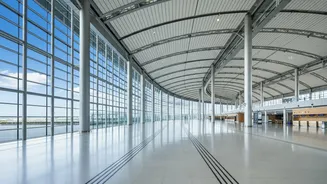
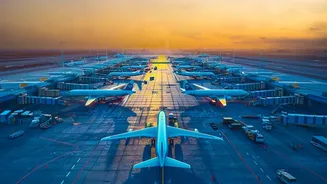
The airport’s success is not merely a case of being in the right place at the right time. It is also the result of decades of meticulous planning and strategic investment. Through four major phases of construction, the latest completed in late 2024, Incheon has expanded its capacity to handle 106 million passengers annually, the third-largest in the world. This foresight ensured the airport was ready to absorb the post-pandemic travel boom and newfound transit demand without succumbing to capacity limits. This vast infrastructure supports 101 airlines connecting to 183 cities worldwide, giving it a more extensive network than regional competitors in Hong Kong and Shanghai. Simultaneously, South Korea has become an increasingly popular tourist destination, with the proportion of foreign nationals using Incheon reaching a record 44.4 percent in the second quarter of 2026, driven by visitors from China and Japan.
Innovation as a Core Principle
Beyond its physical size, Incheon has built a reputation for world-class service and technological innovation, having been ranked number one for service quality for 12 consecutive years by ACI. The airport's management, Incheon International Airport Corporation (IIAC), has consistently focused on enhancing passenger convenience. The corporation is now channelling investment into a widespread AI transformation and developing infrastructure for urban air mobility (UAM). This forward-thinking approach includes plans for automated baggage services and biometric, face-recognition payment systems, aiming to create a seamless and futuristic travel experience. This commitment to not just moving people, but moving them efficiently and pleasantly, has been a key differentiator.