

What Is Floating Yoga?
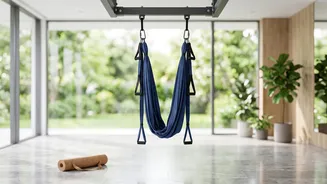
Also known as aerial yoga or anti-gravity yoga, this practice combines traditional yoga poses with acrobatics, Pilates, and dance, all while being suspended in a soft fabric hammock. The hammock, or 'silk', hangs from the ceiling and acts as your primary
support system. Instead of a mat on the floor, you use the fabric to hold your weight, assist with alignment, and allow you to move through poses in a three-dimensional space. The hammock can support your full body weight, enabling you to do everything from sitting and relaxing to hanging completely upside down.
The Central Role of Balance
While the hammock provides support, it's also inherently unstable. This is where the balance challenge comes in. Every movement, from a simple seated pose to a more complex inversion, requires you to engage your core and stabilizer muscles to keep from swinging uncontrollably. This constant engagement is one of the practice's greatest benefits. Unlike a solid floor, the hammock responds to every tiny shift in your weight, forcing you to develop a keen sense of body awareness and control. Thinking of it as a balance practice helps manage expectations; you will wobble, and that's the point. It's this instability that builds deep core strength and improves your proprioception, or your body's ability to sense its position in space.
Other Hurdles for Newcomers
Balance may be the main event, but it's not the only new sensation you'll encounter. First, there's the issue of trust. It can feel unnatural to put your full weight into a piece of fabric hanging from the ceiling. A key part of your first few classes is learning to trust the equipment and your instructor. Second, you'll need more grip and upper body strength than you might expect. While many beginner poses don't require immense strength, you will be holding the fabric and pulling yourself up. Finally, some people experience mild motion sickness or dizziness, especially after inversions. This is normal and usually subsides as your body adapts. Drinking plenty of water and avoiding a heavy meal before class can help mitigate this.
How to Prepare for Your First Class
A little preparation can make your first flight a lot smoother. First, dress appropriately. Wear form-fitting clothing that covers the backs of your knees and your underarms. This prevents uncomfortable chafing from the silk fabric. Avoid baggy clothes that can get tangled, and leave all jewellery at home, as it can snag and tear the hammock. Arrive a few minutes early to get your hammock adjusted to the correct height (usually waist-high for beginner classes) and to speak with your instructor about any injuries or concerns, such as a fear of heights or a tendency for vertigo. Most importantly, listen to your body and don't push yourself. Every pose is optional, especially the inversions.
The Rewards of Finding Your Footing
Once you navigate the initial learning curve, the benefits of floating yoga are immense. The inversions, which are often more accessible with the hammock's support, can help decompress the spine and relieve back pain. The practice is a fantastic full-body workout that builds strength, improves flexibility, and can burn a surprising number of calories. Beyond the physical, there is a unique mental benefit. The feeling of being suspended is often described as weightless and freeing, allowing for a deep sense of relaxation and stress relief. Many students leave class feeling blissful and even a little taller from the spinal decompression.