

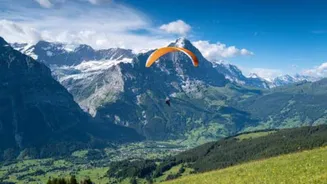
The Allure and the Challenge
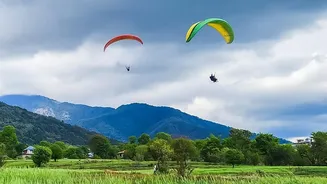
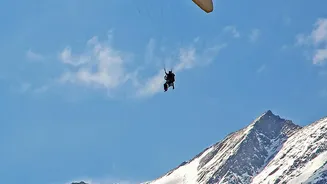
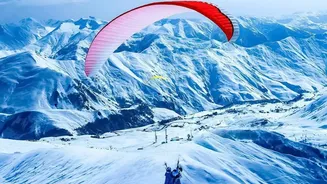
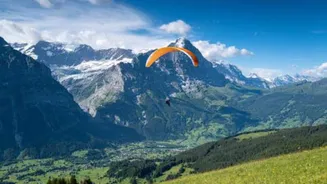
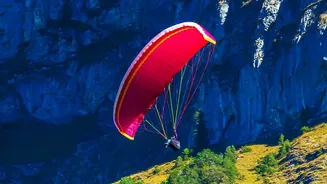
For paraglider pilots and aviation enthusiasts, the French Alps represent a pinnacle of achievement. The region offers some of the most breathtaking scenery in the world, with reliable thermal conditions that can allow for hours of flight. The long flying
window, especially in spring and summer, attracts pilots from across the globe. However, this popular playground is also one of nature's most complex meteorological arenas. Unlike flying over flatlands, mountain environments create their own microclimates. The same forces that provide incredible lift can also generate dangerous, rapidly developing conditions that require deep knowledge and constant vigilance to navigate safely.
The Daily Pulse: Valley Winds and Thermals
The daily rhythm of the Alps is dictated by a breathing-like cycle of winds. During the day, the sun heats the mountain slopes, which in turn warms the air. This warmer, lighter air begins to rise, creating updrafts known as thermals. To replace this rising air, cooler, denser air is pulled up from the plains and along the valley floors. This phenomenon, known as the valley wind, is a predictable and often gentle force that pilots use to their advantage. It generally flows up the valley, opposite to the direction of the river. As the sun sets, the process reverses. The slopes cool down, and the now cooler, heavier air sinks back into the valleys, creating a gentle downslope breeze known as the katabatic wind or mountain wind. This daily pulse provides the foundation for much of the regions' fantastic flying.
When the Mountain Gets Angry: Foehn Winds and Storms
While valley winds are a pilot's friend, other mountain winds are decidedly not. The most notorious is the Foehn (or Föhn) wind. This occurs when a weather system forces air up and over the main Alpine ridge. As the air rises, it cools and drops its moisture as rain or snow on one side. When it descends on the other (leeward) side, it is very dry. This dry air warms rapidly as it is compressed, creating a strong, gusty, and surprisingly warm wind that can descend into the valleys with hurricane force, sometimes exceeding 100 km/h. The Foehn is known to paraglider pilots as a flight-killer, creating violent turbulence that is impossible to fly in. Another major hazard is the rapid development of thunderstorms. The same daytime heating that creates gentle thermals can, in unstable conditions, lead to towering cumulonimbus clouds and violent storms in the late afternoon.
A Pilot's Most Important Skill: Reading the Sky
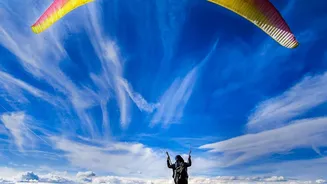
For pilots, flying in the Alps is as much an intellectual challenge as a physical one. Success and safety depend on the ability to read the weather before and during a flight. This starts with a thorough analysis of weather forecasts, including specialised charts that show pressure gradients across the Alps, which can indicate the likelihood of Foehn winds. In the air, pilots are constantly observing cloud development. Small, puffy cumulus clouds with flat bases can indicate usable thermals, but large, cauliflower-shaped clouds are a warning sign of instability and potential storms. Lens-shaped lenticular clouds are another tell-tale sign of strong high-altitude winds and mountain wave activity, which creates severe turbulence. Experienced pilots learn to anticipate how wind will interact with the terrain, understanding that ridges create lift on one side and dangerous turbulence (rotor) on the other.
Staying Safe in the Majestic Playground
Beyond meteorological knowledge, safety in the Alps relies on discipline and the right equipment. Pilots carry GPS units with airspace information, and emergency parachutes are a standard part of the kit. A fundamental rule is to always have an escape route and maintain a safe margin from the terrain. Many accidents in mountain flying are a result of failing to account for the effects of high density altitude, where thinner air reduces aircraft performance. For paraglider pilots, this means making proactive decisions and never getting trapped in a valley or on the wrong side of a ridge as conditions change. Local flying schools and clubs provide crucial site-specific briefings, as wind patterns can be unique to each valley. The unwritten rule is simple: if in doubt, don't launch. The mountain will always be there another day.