

A Tale of Two Moons
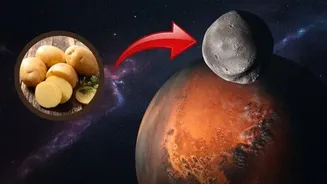
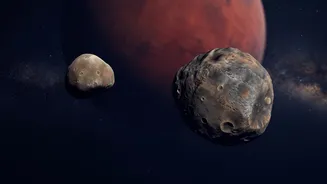
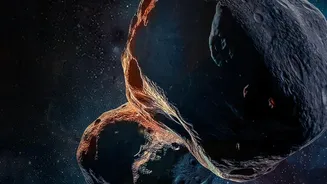
Discovered in 1877, Phobos and Deimos are unlike most moons in our solar system. Named after the Greek gods of fear and terror who accompanied their father Ares (the Greek equivalent of Mars) into battle, they are among the smallest moons known. Phobos,
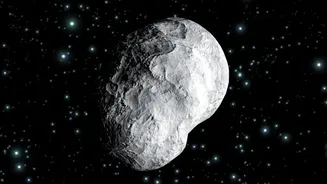
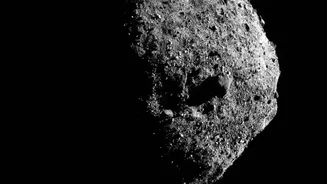
the larger of the two, is about 22 kilometres across, while Deimos is a mere 13 kilometres wide. They are lumpy, heavily cratered, and dark, resembling carbon-rich asteroids. This resemblance is the basis for one of the leading theories about their origin: that they were once rogue asteroids snared by Mars's gravity. However, a critical piece of evidence complicates this seemingly simple explanation.
Theory 1: The Capture Hypothesis
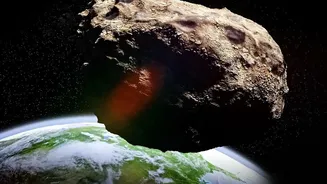
The capture hypothesis suggests Phobos and Deimos are asteroids from the main asteroid belt that strayed too close to Mars and were pulled into orbit. Their appearance strongly supports this idea; they look just like the C-type or D-type asteroids common in the outer solar system. The problem lies in their orbits. When a planet captures an object, the resulting orbit is typically irregular, eccentric, and tilted. Phobos and Deimos, however, have remarkably well-behaved orbits. They circle Mars in nearly perfect circles and, most importantly, lie almost exactly on the planet’s equatorial plane. This orbital tidiness is highly unlikely for two independently captured asteroids, leading many scientists to question the theory.
Theory 2: The Giant Impact
The main competing theory is that the moons were born from Mars itself. Much like our own Moon is thought to have formed from debris after a massive object struck a young Earth, this scenario proposes that a planet-sized body slammed into Mars billions of years ago. The cataclysmic impact would have blasted a huge amount of Martian rock and debris into space, forming a ring around the planet. From this ring, Phobos and Deimos could have gradually coalesced. This 'giant impact' hypothesis neatly explains their circular, equatorial orbits. But it has its own problem: if the moons are made of Martian crust, why do they look so much like dark, carbonaceous asteroids and not like the reddish surface of Mars?.
A Mission to Find the Truth
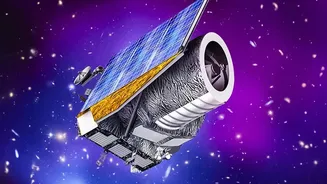
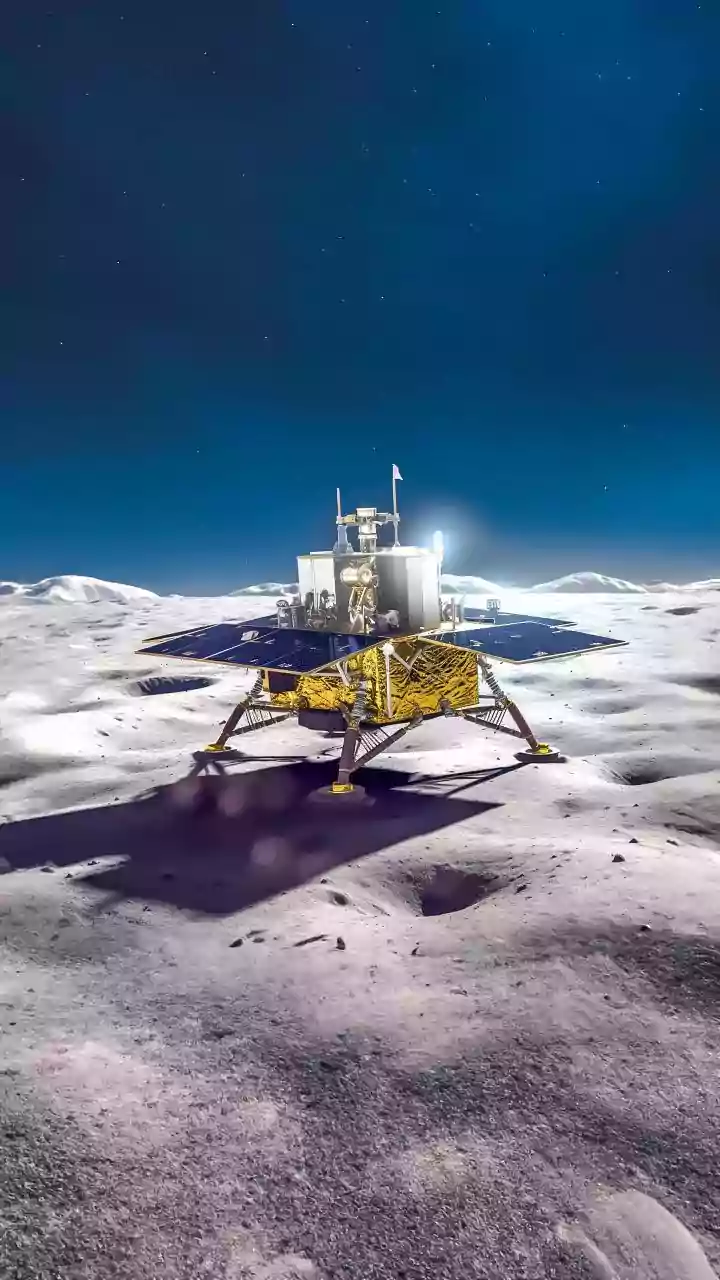
To solve this enduring mystery, the Japan Aerospace Exploration Agency (JAXA) has launched the Martian Moons eXploration (MMX) mission. The spacecraft, which began its journey in October 2026, will arrive at Mars in 2027 to study both moons in detail. The mission's primary goal is audacious: to land on Phobos, collect at least 10 grams of surface material, and return it to Earth for analysis. This will be the first-ever sample return mission from the Martian system. MMX will also deploy a small rover, co-developed by Germany and France, to study the surface of Phobos for several months.
The Clues Are in the Dirt
The samples returned by MMX, expected back on Earth in 2031, hold the key to settling the debate. By analyzing the chemical and mineral composition of the Phobos sample in labs, scientists can determine its origin. If the material is a close match to meteorites known to come from carbonaceous asteroids, the capture theory will gain a significant boost. However, if the sample’s composition is similar to the rocks of Mars, it will provide strong evidence for the giant impact theory. This single sample could finally tell us whether Mars's companions are adopted children or native-born.