





The US midterm elections are over, but for the crucial India-US economic relationship, the results have raised more questions than answers. A newly divided government in Washington complicates the path forward on trade, tariffs, and strategic cooperation.
A New Political Map in Washington
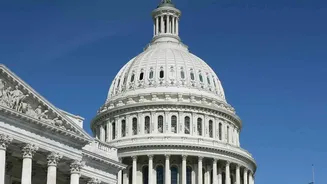
The November 2026 midterm elections have resulted in a significant power shift in Washington D.C., with the Democratic party gaining control of both the House of Representatives and the Senate. This creates a 'divided government', where the Republican White House, led by President Donald Trump, must now negotiate with an opposition-controlled Congress. While executive power allows the President significant leeway in foreign policy and trade, the legislative branch controls funding, has oversight powers, and must approve major new laws or treaties. This new dynamic is the primary source of uncertainty, as it introduces a new layer of checks and balances that could either stall or strategically alter the course of US economic policy toward India.
The High-Stakes Trade Deal Hangs in the Balance
For months, negotiators have been on the cusp of finalizing a significant bilateral trade agreement, with leaders aiming to boost trade to $500 billion by 2030. Following his party's loss in the midterms, some analysts believe President Trump may be more motivated to secure a quick foreign policy win and could increase pressure on India to close the deal. However, a Democrat-led Congress will bring greater scrutiny to any agreement. They are likely to review the economic impact of proposed tariff changes and may push back against terms they feel are not beneficial to American workers and consumers, potentially slowing down the process. This leaves Indian negotiators in a delicate position: facing pressure for a quick deal from the White House while navigating the new realities of a Congress that will want to put its own stamp on any agreement.
Persistent Frictions: Tariffs and Market Access
Long-standing disagreements over tariffs and market access remain central to the economic relationship. The Trump administration has previously used tariffs as a key negotiating tool, with levies on Indian goods causing significant strain. While a potential interim deal earlier in 2026 was discussed to lower some of these tariffs in exchange for India curbing Russian oil imports, the broader framework remains contentious. A Democratic Congress is also wary of protectionist policies but may have different priorities. They could challenge the President's authority to impose tariffs unilaterally, but are unlikely to have the two-thirds majority needed to override a presidential veto. This suggests that while the tariff environment might become more predictable, immediate relief for Indian exporters is not guaranteed. Key sectors like agriculture, pharmaceuticals, and digital services continue to be sticking points.
Strategic Imperatives vs. Economic Policy
Beyond the economic tug-of-war, the strategic alignment between India and the US, largely driven by a shared goal of creating a counterweight to China in the Indo-Pacific, provides a strong foundation for the relationship. This is one area with broad bipartisan support. Initiatives like the Indo-Pacific Economic Framework (IPEF), which focuses on supply chain resilience, clean energy, and fair trade practices, are likely to continue, though perhaps with different emphasis under a divided government. However, even with strategic alignment, economic policies can diverge. A Democratic Congress may place a stronger emphasis on labor rights and environmental standards within these frameworks, areas where India has historically been cautious. The enduring 'China factor' will continue to push both nations closer, but the economic execution of that partnership will be debated more intensely in Washington.