








A Landmark Year for India's Fastest Train
The year 2027 is now officially circled on the calendar for a major milestone in Indian transportation history. Union Railway Minister Ashwini Vaishnaw has confirmed that trial runs for the country's first bullet train are set to begin between May and
June of 2027, with the first commercial service anticipated to launch just months later. The initial phase will see trains operating on the completed stretches within Gujarat, specifically between Surat and Bilimora, before expanding to other sections. This phased rollout is a deliberate strategy to ensure all systems are tested rigorously under real-world conditions before the entire 508-kilometre corridor connecting Maharashtra's and Gujarat's economic hearts is fully operational. For a project that has navigated immense complexity, this concrete timeline signifies a powerful shift from planning to imminent execution.
The Scale of Construction: A Progress Report
To understand the significance of the 2027 date, it's crucial to look at the sheer scale of the work already completed. The National High Speed Rail Corporation Limited (NHSRCL), the body executing the project, has made substantial headway. As of late 2026, construction is advancing rapidly, particularly in Gujarat. Across the entire 508 km route, a significant portion of the foundational pier work and the elevated viaducts are already in place. In fact, all civil works on the 97-km stretch between Surat and Vapi are now complete. This includes the construction of massive bridges over rivers like the Narmada and Sabarmati. Meanwhile, work on the 12 modern stations is also progressing, with structural work completed at key hubs like Sabarmati, Ahmedabad, and Vadodara. This tangible progress on the ground provides the confidence behind the 2027 trial run announcement.
Engineering Marvels and Monumental Challenges
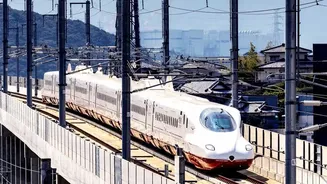
The journey to 2027 has involved surmounting incredible engineering challenges. The project utilizes Japan’s famed Shinkansen technology, known for its impeccable safety and performance. A standout feature is the 21-kilometre underground tunnel in Maharashtra, which includes India's first undersea rail tunnel running for 7 kilometres beneath Thane Creek. This required the use of enormous tunnel boring machines, each weighing thousands of tonnes. Beyond the technical feats, the project has faced hurdles like complex land acquisition, which often involves lengthy negotiations and legal processes. The COVID-19 pandemic also caused unavoidable delays, affecting supply chains and collaboration. Successfully navigating these issues makes the current pace of construction even more impressive.
What the Bullet Train Means for You
Once fully operational, the bullet train will fundamentally change travel between Mumbai and Ahmedabad. The journey, which currently takes over six hours by the fastest conventional train, will be slashed to just about two hours for a limited-stop service. Trains are designed to operate at a speed of 320 km/h. The corridor will connect 12 stations, providing crucial connectivity to industrial towns like Vapi, Bharuch, and Boisar that lack direct air links. This centre-to-centre connectivity, with major stations located in business hubs like Mumbai's Bandra-Kurla Complex (BKC), promises unparalleled convenience for business and leisure travellers alike. The estimated fare is expected to be around ₹3,000 for an end-to-end journey, offering a competitive alternative to air travel, especially when factoring in time saved travelling to and from airports.