






The Current Stop-and-Go Reality
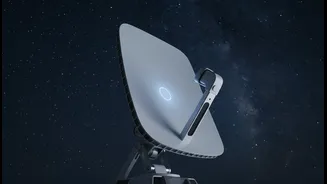
SpaceX's Starlink has been a game-changer for people in rural areas and those who work from remote locations. The service provides high-speed broadband beamed down from a constellation of satellites in low-Earth orbit. For RV owners, boaters, and other
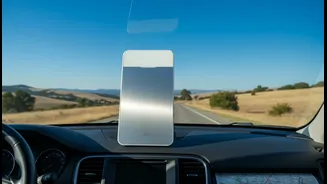
nomads, the 'Roam' plans have offered a way to stay connected. However, there's a significant distinction between using the service while parked at a campsite versus streaming a video call while driving down the highway. Officially, using most Starlink dishes while in motion is either prohibited or unsupported. The standard consumer hardware contains motors to orient itself and can be damaged if used while a vehicle is bouncing around. Doing so can even void the product's warranty. This has left a major gap in the market for users who require uninterrupted connectivity not just at their destination, but during the journey itself.
The Promise of True Mobility
SpaceX has long acknowledged the demand for in-motion connectivity. The company does offer a high-priced solution: the Flat High-Performance dish, which costs thousands of dollars and is designed for permanent installation on vehicles and vessels. This professional-grade hardware is built to withstand the elements and maintain a connection at speed, but its price puts it out of reach for the average consumer. Recent policy changes in early 2026 have further clarified the rules. Standard Roam and Priority plans now officially support in-motion use, but only up to 100 mph (about 160 km/h), a reduction from previous limits. This change was primarily aimed at curbing the use of non-aviation hardware on private jets, pushing those users toward more expensive, dedicated aviation plans. For the average user in a car or RV, the limitation isn't the speed cap, but the fact that only the expensive high-performance dish is officially approved for this use.
Enter the Starlink Mini
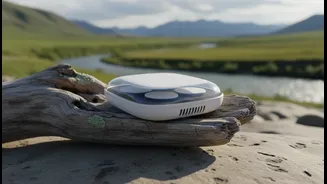
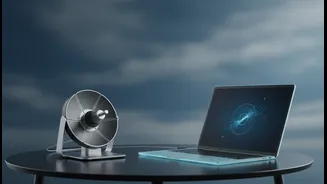
In mid-2024, SpaceX CEO Elon Musk unveiled the Starlink Mini, a compact, lightweight dish about the size of a laptop that can be easily carried in a backpack. He touted it as a product that would "change the world," offering impressive speeds and low latency at roughly half the price of the standard dish. The Mini is incredibly power-efficient, drawing only 20-40 watts, and can even be run off a portable USB-C power bank, making it ideal for campers and travellers. However, the initial version of the Mini, like its larger standard counterparts, was designed for portable use — meaning you stop, set it up, and then connect. It was not built for use while in motion. This has been a point of confusion for many, as its portability suggests mobility.
The Wait for an Updated Version
The headline's premise holds true because the key to unlocking affordable, consumer-grade internet-in-motion lies in a future, updated version of the Starlink Mini. While the current hardware and plans allow for some mobility, they aren't the seamless solution users are waiting for. Recent firmware analysis from July 2026 has uncovered code referencing a "MINI1_RUGGED_PROD1" device, suggesting a more durable, professional version of the Mini is in development. Further code pointed to an integrated battery, which would free the device from external power sources and enhance its portability. This rumoured 'Rugged Mini' or 'Mini Pro' is what many believe will be officially sanctioned and designed for in-motion use without the high cost of the current Performance dish. Until that specific product is released, users who need reliable internet while their vehicle is moving are stuck: either pay a premium for the high-performance hardware or wait for the next generation of the Mini to arrive.
What This Means for Users in India
As Starlink prepares for its official launch in India, these hardware distinctions will be crucial. The service has secured the necessary permits to begin operations, with expectations of a rollout by late 2025 or early 2026. Initial reports suggest monthly plans could be in the range of ₹3,000, with the hardware kit being a separate, one-time purchase. The availability of a rugged, in-motion capable Starlink Mini could be a massive boon for India's logistics sector, emergency services, and a growing community of overland travellers. However, customers will need to pay close attention to the fine print to understand which specific hardware and plan combinations support the true 'on-the-go' connectivity they desire. The dream of working from a moving caravan in the Himalayas remains just over the horizon.