



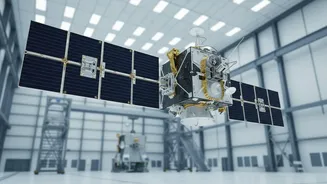
What is an Autonomous Mission?
Think of it as the difference between a remote-controlled car and a self-driving one. For decades, space missions have been operated like the former. Ground control sends a specific command, the spacecraft executes it, and then waits for the next instruction.
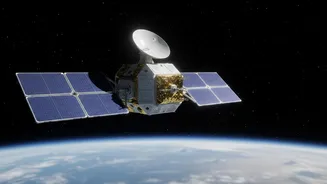
This is a reliable but slow process, especially when communication signals take minutes or even hours to travel to deep-space probes near Mars or Jupiter. An autonomous mission, by contrast, gives the spacecraft a set of goals and the intelligence to make its own decisions to achieve them. This involves the spacecraft planning its own actions, diagnosing and fixing problems, and even deciding what scientific data is most valuable to send back to Earth, all with minimal human oversight.
Why the Big Push for Autonomy Now?
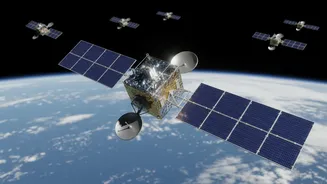
Several factors are driving this shift, a key topic at SMOPS-2026. The first is overcoming the light-speed delay. For missions to the outer planets or even Mars, real-time control is impossible. Autonomy is a necessity, not a luxury. Secondly, cost and efficiency. Reducing the need for constant ground-based control lowers operational costs substantially. Thirdly, the sheer scale of modern space operations, like managing large satellite constellations, makes manual control impractical. Finally, autonomy enables new kinds of science. A probe can be empowered to investigate a sudden, unexpected phenomenon—like a cryovolcanic plume on a distant moon—without having to wait for a 'yes' from controllers millions of kilometres away.
How to 'Read' an Autonomous Mission
So, how do we know if a self-directing, multi-billion dollar spacecraft is doing its job correctly? Instead of just tracking commands sent and received, mission operators now focus on interpreting the spacecraft's decision-making process. The key is to understand the 'why' behind its actions. The first thing to look for is 'goal-oriented performance'. Is the spacecraft making progress toward its stated scientific or operational goals? The second is 'resource management'. Is it managing its power, fuel, and data storage efficiently? The third, and most critical, is 'fault detection and recovery'. You look for logs showing the spacecraft identified a problem—say, a stuck wheel or a sensor glitch—and executed a pre-planned solution on its own. Success is no longer just about following orders; it's about intelligent problem-solving in an unpredictable environment.
The Challenges and Inherent Risks
Handing over the keys to a spacecraft is not without its risks. The primary challenge is building and testing software that can reliably handle unexpected situations. The space environment is harsh and unpredictable, and it's impossible to program for every single contingency. There's a significant concern in the industry about ensuring these complex systems are safe and can be trusted. This requires a massive investment in verification and validation before launch. Furthermore, as these systems become more common, new challenges like managing autonomous space traffic and ensuring cybersecurity become paramount, topics that were central to the discussions at SMOPS-2026.
What This Means for India's Space Sector
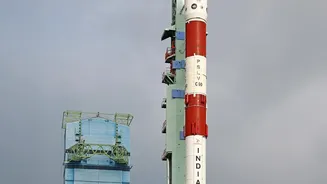
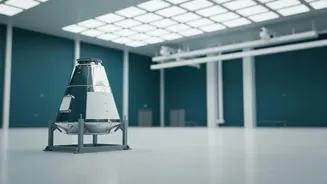
The focus on automation at SMOPS-2026, held in India's space-hub Bengaluru and co-organised by ISRO, is no coincidence. For India's ambitious space program, including the Gaganyaan human spaceflight mission and future interplanetary explorations, autonomy is a critical enabler. As ISRO and Indian space startups aim for more complex missions, integrating AI and autonomous systems will be essential for competing on the global stage. It will allow for more efficient management of satellite constellations, enable sophisticated deep-space science, and reduce the operational burden on ground stations. This shift represents a major opportunity for India's tech sector to contribute to the next generation of space exploration.