







Quantum Computing in a Nutshell
Imagine a regular computer. It works with bits, which are like tiny switches that can be either on (1) or off (0). All the complex tasks your phone or laptop perform are just incredibly fast calculations using these zeros and ones. Quantum computers are fundamentally
different. They use 'qubits' which, thanks to the principles of quantum mechanics, can be a 0, a 1, or both at the same time—a state called superposition. This ability, along with another quantum phenomenon called entanglement (where qubits are linked and can affect each other instantly, no matter the distance), allows quantum computers to process massive amounts of information simultaneously. This gives them the potential to solve certain complex problems—like designing new molecules for medicine, creating novel materials, or breaking advanced encryption—that are practically impossible for even the most powerful classical supercomputers.
Introducing AU-QUASAR in Bengaluru
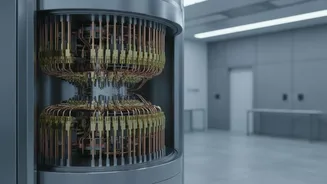
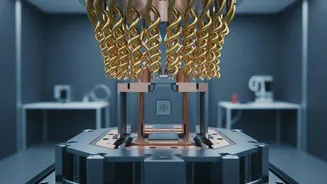
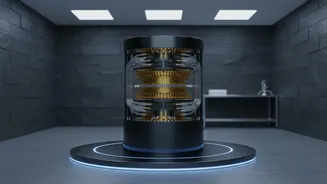
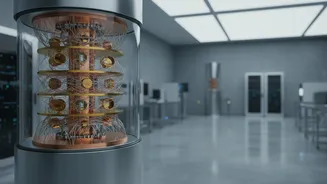
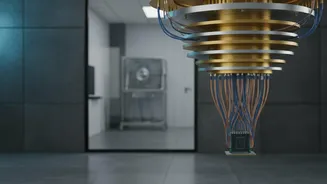
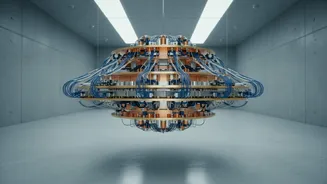
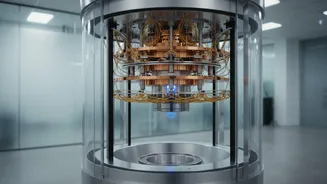
The new system is located at Alliance University's campus in Electronics City, Bengaluru, within a new centre named AU-QUASAR (Alliance University – Quantum AI School for Advanced Research). The facility houses an 8-qubit superconducting quantum computing system called 'QVidya,' which was designed and built indigenously by Bengaluru-based startup QpiAI. Announced in February 2026 and inaugurated in early August 2026, this marks a milestone as the first private university in India to have a quantum computer physically installed and operating on its campus. Unlike accessing quantum systems remotely via the cloud, this on-site installation provides students, researchers, and industry partners with direct, hands-on access to quantum hardware.
A Hub for Innovation and Learning
This initiative is a partnership between QpiAI and Alliance University, created as a joint academic-industry facility to accelerate quantum adoption. The goal is to move quantum technology out of exclusive research labs and make it an accessible tool for education and innovation. The centre will offer undergraduate, postgraduate, and doctoral programs in quantum computing and AI, allowing students to design and run experiments on an actual quantum computer. Beyond academia, the facility is strategically placed to serve the hundreds of tech companies, public-sector aerospace and defence firms, and thousands of startups in Bengaluru's tech corridor. It provides 'quantum computing as a service' for commercial and strategic users, helping them explore proofs-of-concept and develop new applications.
What Can an 8-Qubit System Do?
While an 8-qubit system is not yet powerful enough to tackle the massive problems envisioned for large-scale quantum computers, it serves a crucial purpose as an experimentation and training platform. It allows researchers and students to learn how to design quantum circuits, build algorithms, and understand the practical challenges of working with quantum hardware, such as managing the 'noise' and instability that affect qubits. The system will initially be used for smaller-scale problems and simulations, such as modeling small molecules. This hands-on experience is vital for building a skilled workforce capable of harnessing the more powerful 50- to 1000-qubit systems that India aims to develop in the coming years as part of its national strategy.
Powering India's National Quantum Mission
The launch of the AU-QUASAR centre aligns directly with the goals of India's National Quantum Mission (NQM). Approved in 2023 with a budget of over ₹6,000 crore, the NQM aims to establish India as a global leader in quantum technologies. A key objective of the mission is to develop indigenous quantum computers, create a vibrant ecosystem for research and development, and build a quantum-ready talent pool. By providing accessible, homegrown quantum hardware, the Bengaluru facility acts as a vital node in this national network. It helps democratize the technology, fostering the innovation and skill development needed to achieve technological self-reliance in a field poised to drive the next industrial revolution.