


Cosmic Fireworks and Their Engines
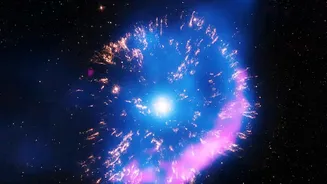
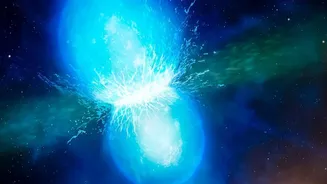
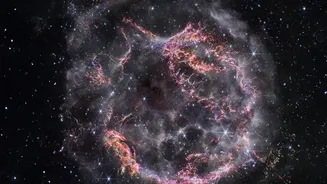
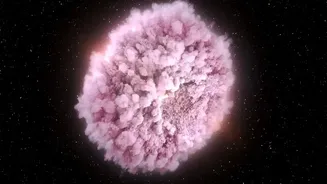
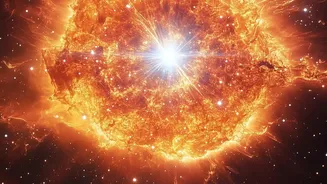
A core-collapse supernova is one of the most violent events in the universe. It happens when a star many times more massive than our sun runs out of fuel. Its core implodes under its own immense gravity, and the outer layers are blasted into space in a brilliant
explosion. These events are not just spectacular; they are essential for life, forging and scattering heavy elements like iron and gold across the cosmos. For decades, scientists have believed that the engine driving this explosion is a massive outward push from neutrinos. During the core's collapse, an almost unimaginable number of these particles are created and blasted outwards, carrying away about 99% of the dying star's energy. The idea is that a small fraction of these neutrinos get absorbed by the material just behind the outward-moving shockwave, giving it the extra kick it needs to blow the star apart.
The Ghost Particle's Identity Crisis
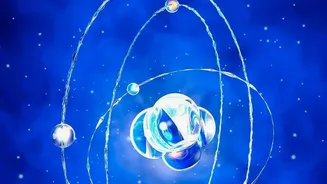
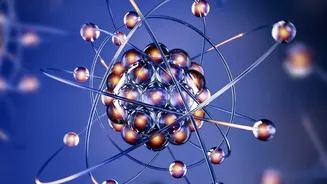
Neutrinos are often called 'ghost particles' because they barely interact with other matter. Trillions of them are passing through your body right now, completely unnoticed. But they have another strange property: they come in three types, or 'flavours'—electron, muon, and tau. What's more, they can change from one flavour to another as they travel, a phenomenon called neutrino oscillation. This discovery, which was awarded the 2015 Nobel Prize in Physics, confirmed that neutrinos have a tiny amount of mass and opened up a new dimension in particle physics. Each flavour interacts with matter slightly differently, a crucial detail when you have the dense, chaotic environment of a dying star.
A Change of Flavour, A Change of Fate
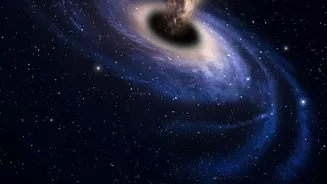
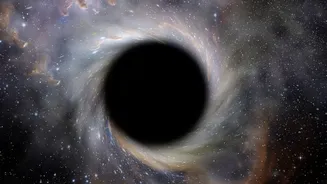
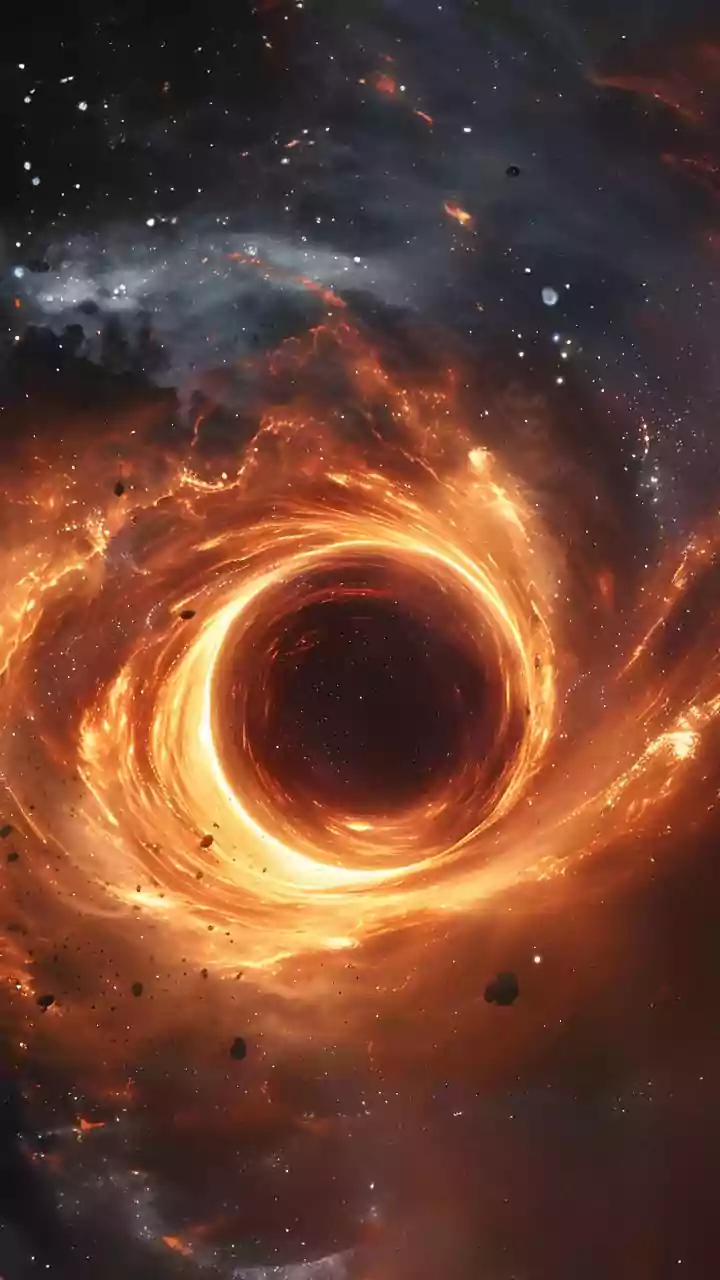
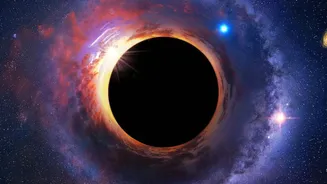
The headline-making discovery comes from new, sophisticated computer simulations developed by researchers at the University of Copenhagen's Niels Bohr Institute. For years, incorporating the complex physics of neutrino flavour changes into supernova models was too computationally expensive. But by using a simplified yet powerful model, the researchers explored what happens when you account for these rapid flavour changes, known as 'fast flavour instability'. The results were dramatic. The simulations showed that for certain stars, particularly those between 16 and 30 times the mass of our sun, these flavour conversions can have a profound effect. The rapid changes can alter how neutrinos deposit their energy, potentially weakening the outward shockwave and causing the explosion to fizzle. Instead of a supernova, the star continues to collapse, forming a black hole.
Why This Computer Model Matters
It's vital to remember that these results come from computer modelling, not direct observation of a star. In astrophysics, computer simulations are an essential tool for exploring scenarios that are impossible to create in a lab. They allow scientists to test theories and understand the interplay of complex physics, like gravity, nuclear reactions, and particle behaviour. The new study by researchers Mariam Gogilashvili and Irene Tamborra suggests that neutrino flavour conversions are not a minor detail but a critical piece of the supernova puzzle. Their work could help explain cosmic mysteries, such as why astronomers have observed fewer supernovae than theories predict for certain types of stars, and why some neutron stars (the dense remnants of supernovae) are less massive than expected. Many stars that were expected to explode in previous models failed to do so when flavour conversion was included.