



The Heart of the Falcon
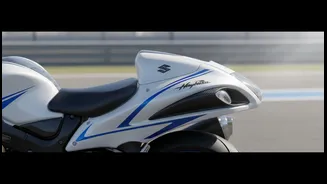
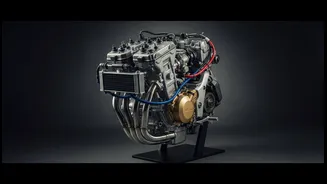
Named after the Peregrine Falcon, the world's fastest bird, the Hayabusa was built for speed, and its engine is the source of that prowess. The current generation's 1,340cc, liquid-cooled, inline-four motor is a testament to balanced performance. While
the latest model produces around 187-190 horsepower, a slight dip from the second generation's peak of 197, Suzuki engineers focused on enhancing real-world rideability. They refined the torque curve to be broader and more accessible at low-to-mid-range speeds. This means the bike delivers a massive, smooth wave of power from almost any RPM, providing effortless acceleration that makes it both a formidable hyperbike and a surprisingly manageable street machine. It’s this combination of raw grunt and refined delivery that sets it apart.
A Legacy Forged in Speed
When the first Hayabusa debuted in 1999, it shattered records and created the “Ultimate Sport” category. With a 1299cc engine, it became the fastest production motorcycle in the world, capable of speeds over 300 km/h (around 194 mph). This act prompted a “gentlemen's agreement” among major manufacturers to electronically limit top speeds to 299 km/h (186 mph), cementing the original 'Busa's place in history. In 2008, the engine was bored out to 1,340cc for the second generation, boosting power and torque. The third and current generation, while built on this foundation, features over 550 new or redesigned parts, with a heavily revised engine aimed at durability and quicker launches.
More Than Just Peak Power
In an era of supercharged rivals like the Kawasaki Ninja H2, the Hayabusa’s engine stands out for its naturally aspirated design. While the H2 boasts a higher peak horsepower figure thanks to its supercharger, the Hayabusa relies on sheer displacement. This results in a different character entirely. The 'Busa provides a linear, predictable, and immense surge of torque that many riders find more usable and less frantic than the explosive power of a forced-induction engine. It’s a powerplant known for its robust construction and reliability, making it a popular choice not just for speed demons but also for high-mileage sport-touring enthusiasts and even modifiers who turbocharge the engines for drag racing.
Tamed by Technology
Harnessing the engine's monstrous output is a sophisticated suite of electronics called the Suzuki Intelligent Ride System (S.I.R.S.). This system includes a ride-by-wire throttle, multiple power modes, a 10-mode traction control system, a bi-directional quickshifter, launch control, and even cruise control. These aids don't dilute the experience but instead make the Hayabusa remarkably adaptable. A rider can choose a soft and gentle power delivery for cruising in the city or unleash the engine's full potential on a track or open road. This electronic safety net allows a wider range of riders to confidently manage the bike's performance, making it one of the friendliest near-200 horsepower motorcycles available.
An Enduring Formula
While some critics question Suzuki's decision to refine rather than completely reinvent the Hayabusa's engine for its latest generation, the powerplant's enduring appeal speaks for itself. It represents a philosophy that prioritizes balanced, usable performance over chasing the highest numbers on a spec sheet. The 1,340cc engine delivers a unique blend of overwhelming force and surprising civility. It’s this duality—the ability to be a comfortable continent-crosser one moment and a drag-strip dominator the next—that has kept the Hayabusa in a class of its own for over two decades. It’s not just an engine; it’s the soul of an icon that continues to soar above the competition.