





Gaganyaan: A Mission of National Pride
The Gaganyaan programme is India’s ambitious initiative to demonstrate human spaceflight capability by launching a crew of three members into an orbit of 400 kilometres for a three-day mission and bringing them back safely to Earth. This monumental undertaking
will make India the fourth nation in the world—after the United States, Russia, and China—to independently send humans into space. The mission is not just a technological leap but a symbol of national aspiration. At the heart of this endeavour is a non-negotiable principle: astronaut safety. This has led to one of the most rigorous testing campaigns in the Indian Space Research Organisation's (ISRO) history, ensuring every system is proven reliable before astronauts step aboard.
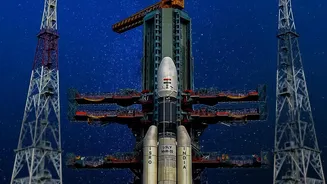
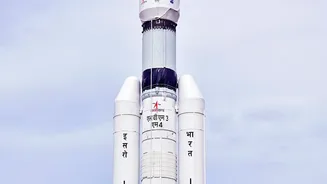
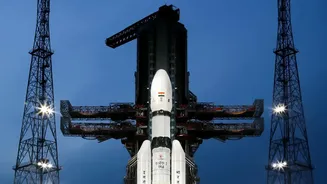
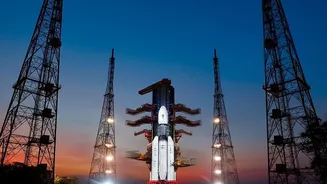
Human-Rating the Mighty LVM3 Rocket
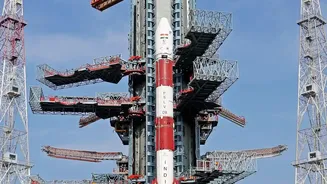
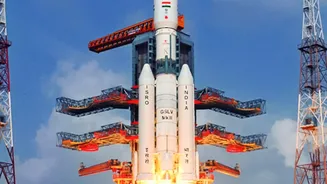
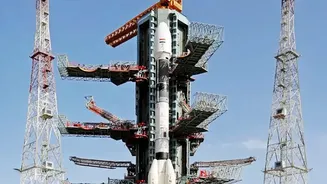
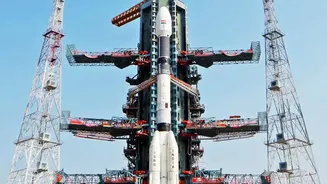
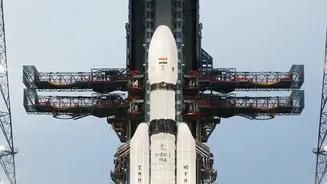
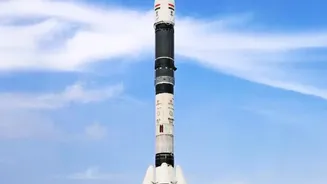
The rocket tasked with carrying Gaganyaan is a specially modified version of ISRO's most powerful and reliable launcher, the Launch Vehicle Mark-3 (LVM3). This new version is called the Human-Rated LVM3, or HLVM3. 'Human-rating' is the exhaustive process of certifying that a launch system is safe enough for people. It involves adding redundant systems, strengthening structures, and qualifying every component to a much higher standard of reliability than required for a satellite launch. ISRO has confirmed that the development and ground testing of all propulsion stages of the HLVM3—including its solid, liquid, and cryogenic engines—have been successfully completed, a crucial step toward its first uncrewed flight.
The Ultimate Insurance Policy: The Crew Escape System
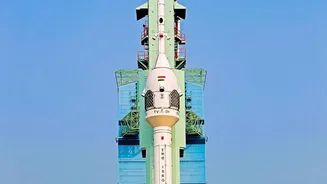
What happens if something goes wrong during launch? That's where the Crew Escape System (CES) comes in. It’s an emergency escape measure designed to quickly pull the crew module away from the rocket to a safe distance in the event of an anomaly on the launchpad or during ascent. The system uses a set of quick-acting, high-burn-rate solid motors to perform this rapid ejection. ISRO has performed several critical tests to validate this life-saving technology. A key test, known as the Test Vehicle Abort Mission-1 (TV-D1), was successfully conducted in October 2023, demonstrating a mid-flight abort where the CES fired as planned, separating the crew module and allowing it to land safely in the Bay of Bengal. This proved the system’s effectiveness under challenging, real-world conditions.
Testing the Crew's Home in Space
The astronauts will travel inside the Orbital Module, which consists of the Crew Module and the Service Module. The Crew Module is the habitable space, a double-walled capsule equipped with life support systems to provide an Earth-like environment for the crew. This includes everything from regulating temperature and pressure to managing carbon dioxide levels. To test the module's parachute system, ISRO has conducted a series of Integrated Air Drop Tests (IADT). In these tests, a simulated crew module is dropped from an aircraft to validate the complex sequence of parachute deployments needed for a safe splashdown. The first uncrewed G1 mission, targeted for late 2026, will be a full end-to-end test of the Orbital Module.
Vyommitra: The Humanoid Pioneer
Before any Indian astronaut flies, a humanoid robot named Vyommitra will pave the way. Vyommitra, which translates to 'space friend', is a female-presenting robot designed to simulate human functions during the uncrewed test flights. She can operate switch panels, monitor cabin parameters, and communicate with the ground crew. During the first uncrewed Gaganyaan mission (G1), Vyommitra will occupy an astronaut's seat, allowing ISRO to gather vital data on how the flight will affect a human body without any risk. This robotic precursor mission is a critical step to validate the life support and environmental control systems, ensuring the cabin is perfectly safe for its future human occupants.