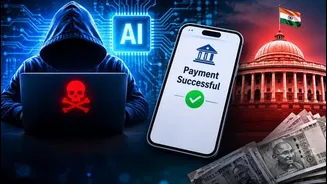








Meet the 'Evil Twins' of ChatGPT
The threat revolves around malicious generative AI tools, sometimes called 'blackhat alternatives' to popular models like ChatGPT. Programs known as FraudGPT and WormGPT are being sold on criminal forums, designed specifically to assist with illegal activities.
Unlike their mainstream counterparts, these tools have no ethical safeguards and are built to help users craft highly convincing phishing emails, create malware, and find software vulnerabilities. They lower the technical barrier for entry, allowing individuals with minimal expertise to launch sophisticated attacks that were once the domain of skilled hackers.
The New Face of Phishing and Fraud
The primary use of these criminal AI tools is to supercharge social engineering. The FBI warns that AI can create highly personalized and grammatically perfect phishing messages, making them far more deceptive than older scam emails which were often riddled with errors. These tools can also be used to create deepfake audio and video to impersonate executives or family members, tricking victims into authorizing fraudulent wire transfers or revealing sensitive data. In India, where nearly half the adult population has encountered AI voice cloning or deepfakes, the threat is already a reality.
From Single Hacks to Automated Attacks at Scale
The most significant change brought by AI is the automation and speed of attacks. The FBI recently warned about a specific open-source AI tool called ARTEX, which malicious actors have used to go from initial targeting to gaining full administrative access to a company's network in under three hours. This automation allows even small criminal groups to run multiple campaigns at once, targeting thousands of victims simultaneously. One campaign highlighted by the FBI compromised a cloud backup service and attempted to access the systems of over 2,250 downstream customers.
Why Indian Businesses Are a Prime Target
India's rapidly growing digital economy makes it particularly vulnerable. A recent survey found that 93% of Indian businesses are concerned about AI making data breaches more severe. With a massive number of new internet users and a diverse linguistic landscape, AI's ability to create flawless, culturally specific scam messages poses a major risk. Recent reports show that over 150 non-banking financial companies (NBFCs) in India have lost nearly ₹300 crore to cybercriminals, with some attacks leveraging AI to manipulate loan disbursal systems. These incidents are no longer just an IT issue; they represent a boardroom-level risk that can affect business continuity and customer trust.
Strengthening Defences in the AI Era
Defending against AI-powered attacks requires a shift from a reactive to a proactive security posture. The FBI and other cybersecurity experts recommend a multi-layered approach. This includes implementing strong, phishing-resistant multi-factor authentication and adopting a 'Zero Trust' security model, where every access request is verified. Employee training is more critical than ever, focusing not just on spotting fake emails but on procedural verification. For any request involving financial transactions or sensitive data, it is vital to confirm it through a separate, pre-established communication channel, regardless of how legitimate the original message appears.