









A Closer Look at the Numbers
The data, released as part of the All India Survey on Higher Education (AISHE) 2023-24, reveals a story of growing appeal. This figure represents an 18.9% increase in international student enrolment over the last five years. While students arrived from
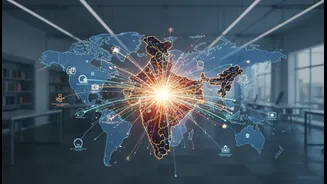
173 different countries, the majority come from India's immediate and extended neighbourhood. Nepal is the largest source, accounting for 24.1% of all foreign students. Following Nepal are students from the UAE, the United States, Bangladesh, and Nigeria, with the top ten source countries making up nearly 64% of the total international student body. This concentration highlights India's role as a primary regional education hub, built on a foundation of cultural familiarity, proximity, and affordability.
The Most Popular Destinations and Courses
Within India, certain states have emerged as magnets for international talent. Karnataka leads the pack, attracting 7,914 foreign students, with Punjab following closely behind. Maharashtra, Uttar Pradesh, and Tamil Nadu also feature in the top five, showcasing a network of institutions across the country that are equipped to host a global student body. When it comes to what these students are studying, undergraduate programs are by far the most popular choice, accounting for nearly 74% of enrolments. Popular fields include technology, business administration, commerce, and sciences, reflecting India's academic strengths in these demanding disciplines.
The Driving Force: Policy and Affordability
This influx is not accidental. It is the result of concerted government efforts, most notably the 'Study in India' program launched in 2018. This flagship initiative aims to make India a prime destination for higher education by streamlining the admission and visa process through a unified digital portal. A major draw for students is the sheer value proposition. Indian universities offer high-quality, English-medium instruction at a fraction of the cost of Western institutions. The affordability of both tuition and living expenses allows students to receive a globally competitive education without the burden of significant debt.
Beyond the Classroom: The Cultural Pull
India offers more than just a degree; it provides a unique cultural immersion. For many students, the opportunity to live in a diverse, multicultural society is a significant part of the appeal. The experience of navigating a country with a rich history, a multitude of languages, and vibrant festivals contributes to a holistic education that builds adaptability and a global perspective—skills highly valued in today's interconnected world. This blend of academic rigour and life-changing cultural exposure is a key component of India's soft power.
The Road Ahead: Ambitions and Challenges
While the current numbers are encouraging, they are just a stepping stone. The Indian government has set an ambitious target of attracting 200,000 international students annually by 2030. Achieving this four-fold increase will require overcoming several challenges. Analysts suggest that faster visa processing, clearer pathways for post-study work, and continued investment in campus infrastructure like hostels and student support services are crucial. The goal is to transition from a regional hub to a truly global education destination, capable of competing with established players and retaining its own talent.