



The Quantum Threat Is Coming
For decades, our online lives—from banking and shopping to private messages—have been protected by encryption methods like RSA and ECC. These complex mathematical shields are practically unbreakable for today's computers. However, the theoretical promise
of quantum computing threatens to shatter that security. A sufficiently powerful quantum computer, running an algorithm known as Shor's Algorithm, could solve the mathematical problems at the heart of our current encryption in hours, not millennia. While such a machine doesn't exist yet, experts predict a cryptographically relevant quantum computer (CRQC) could emerge between 2030 and 2040. This has created an urgent, if not yet panicked, scramble to develop new, quantum-resistant forms of protection. The threat isn't just in the future; it's a present-day danger known as "harvest now, decrypt later," where adversaries are collecting encrypted data today, planning to decrypt it once they have a quantum computer.
What is Kyber?
In response to the quantum threat, the U.S. National Institute of Standards and Technology (NIST) launched a global competition to find and standardize post-quantum cryptography (PQC). After a multi-year process, one of the clear winners to emerge for general encryption was an algorithm called CRYSTALS-Kyber. Now formally known as ML-KEM (Module-Lattice-based Key-Encapsulation Mechanism), Kyber is designed to be secure against attacks from both classical and quantum computers. Its security is based on a different type of mathematical problem, known as the learning with errors (LWE) problem, which is believed to be incredibly difficult for even quantum computers to solve. Because of its relative efficiency and strong security, NIST selected it as the primary standard for protecting data confidentiality in the quantum era, destined to replace the protocols we've relied on for decades.
NVIDIA’s High-Stakes Bet
A company like NVIDIA, whose GPUs power the world's most advanced AI data centers, has a vested interest in securing the data processed on its chips. As AI models become more complex and valuable, protecting the intellectual property and sensitive information they handle is paramount. NVIDIA has been actively working to accelerate PQC algorithms on its hardware. The massive parallel processing capabilities of GPUs are well-suited for the complex matrix and polynomial mathematics involved in lattice-based cryptography like Kyber. The company even developed a software library, cuPQC, to help developers leverage its GPUs for this exact purpose, demonstrating massive speedups over traditional CPUs. This isn't just about offering a feature; it's about ensuring their hardware remains the backbone of a secure computing future.
The ‘Kyber Snag’ Explained
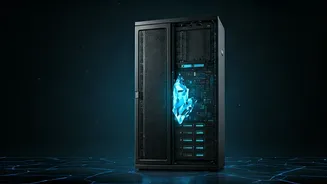
While the headline suggests a snag with the Kyber algorithm itself, recent reports point to a different kind of challenge for NVIDIA. An industry report noted that NVIDIA's 'Kyber' rack-scale architecture, part of its next-generation Rubin Ultra chip platform, has been delayed from 2027 to 2028. This delay is reportedly due to manufacturing issues with critical circuit boards needed for this advanced system architecture. This news is less about a flaw in the post-quantum algorithm and more about the immense hardware engineering challenges involved in building the next generation of AI supercomputers. The naming of the architecture itself, however, shows just how central the idea of a quantum-secure future is to NVIDIA’s product roadmap. Implementing PQC is not without its own difficulties; the algorithms can be computationally intensive and require more memory, but the primary 'snag' in this context appears to be one of hardware production rather than cryptographic vulnerability.
Why 2028 Is The New Focus
NVIDIA's roadmap adjustment shines a spotlight on 2028, but the entire industry is racing against a broader timeline. NIST and other national security agencies have set aggressive targets for migrating away from vulnerable encryption. Most recommendations urge organizations to phase out RSA and ECC for new applications by 2030, with a complete transition for critical systems targeted for 2035. This transition isn't like flipping a switch. It involves updating everything from internet browsers and web servers to the underlying hardware and software that run our global infrastructure. For a company at the scale of NVIDIA, a one-year shift in a flagship product designed for this new era is significant. It underscores the difficulty of not just developing but also manufacturing and deploying these future-proofed systems at scale, putting more pressure on an already tight industry-wide deadline.