


From Tech Demo to Science Scout
The Ingenuity Mars Helicopter was a groundbreaking technology demonstration. Over nearly three years and 72 flights, it far exceeded its original goal of five test flights, proving that rotorcraft could navigate the thin Martian atmosphere. It acted as an aerial
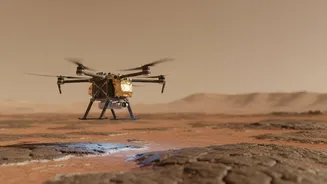
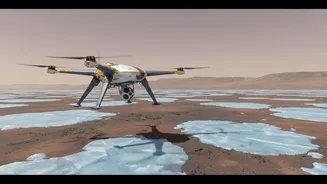
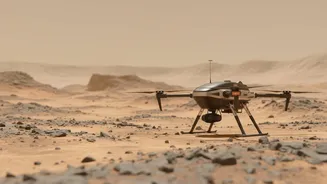
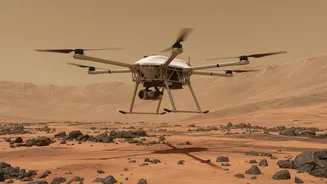
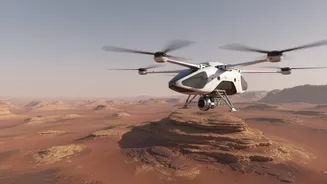
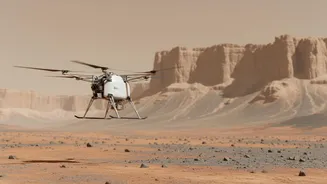
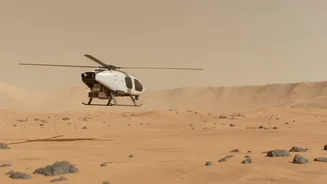
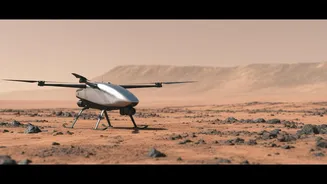
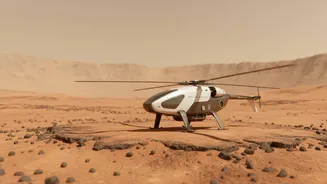
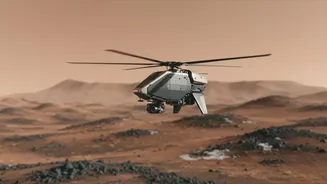
scout for the Perseverance rover, helping plan routes and identify interesting science targets. Building on this success, NASA is developing the next generation: the Mars Science Helicopter, with the Skyfall mission concept as a leading proposal. Unlike Ingenuity, which was primarily designed to prove flight was possible, Skyfall's helicopters are being designed from the ground up as dedicated scientific explorers, each equipped with a suite of advanced instruments.
What is the Skyfall Mission Concept?
Skyfall proposes sending a team of three autonomous helicopters to Mars, potentially launching as early as late 2028. In a bold departure from previous missions, these helicopters would not need a rover for deployment or to relay communications. The plan involves an innovative mid-air deployment, where the rotorcraft would separate during their descent through the atmosphere, start flying, and land themselves independently. This approach allows them to operate with more freedom, covering wider areas and accessing terrain that is too difficult or risky for a ground-based rover to reach. The company AeroVironment, which helped build Ingenuity, is co-designing the Skyfall helicopters with NASA's Jet Propulsion Laboratory (JPL).
The Power of an Aerial Radar 'Cape'
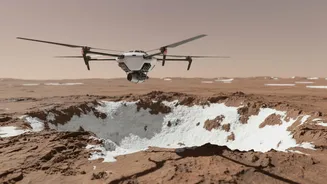
The game-changing instrument aboard the Skyfall helicopters is a new form of ground-penetrating radar (GPR). Engineers at JPL have been testing a lightweight, flexible antenna that hangs below the helicopter. Nicknamed a 'cape', this fabric-based antenna is made of materials like polyester and Vectran, which was used in the airbags for the Spirit and Opportunity rovers. This unique design allows it to be flexible enough to bend upon landing and spring back into shape for flight, a crucial feature for a mission expected to make dozens of flights. The antenna recently survived testing that simulated over 200 Mars landings. This GPR will allow the helicopters to fly low and slow, peering up to 16 feet below the surface to create high-resolution 3D maps of the subsurface—a feat impossible for current Mars orbiters.
The Hunt for Hidden Water Ice
The primary goal of the GPR is to find and map deposits of shallow water ice. While orbiters have detected deep ice deposits, the first few feet below the surface remain a blind spot. This near-surface zone is critically important. Scientifically, it holds clues about Mars' recent climate history. For future human exploration, this accessible ice is a potential goldmine. Astronauts could theoretically process it to create drinking water, breathable oxygen, and even rocket fuel, significantly reducing the mass they would need to carry from Earth. By mapping the extent and depth of this ice, Skyfall could identify resource-rich destinations and help select safe landing sites for the first human missions to Mars.
More Than Just a Radar
While the radar is the star of the show, the Skyfall helicopters will carry other powerful instruments. Each of the three rotorcraft is planned to have four instruments in total. These include 13-megapixel color cameras to build detailed 3D terrain maps, near-infrared imagers to analyze the composition of surface dust and rocks, and a suite of sensors to measure temperature and wind patterns. This combination of tools will provide a comprehensive view of the Martian environment, both above and below ground. The mission is still a concept in development, with engineers working to finalize and qualify the hardware for the harsh Martian environment, but it represents a clear and ambitious vision for the future of planetary exploration.