



A Celestial Photobomb
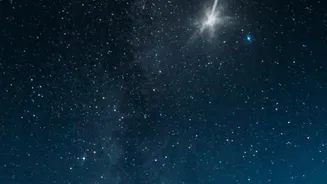
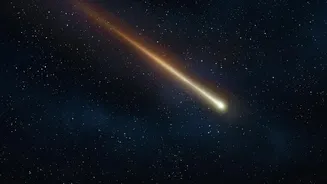
On August 3, 2026, NASA's Astronomy Picture of the Day (APOD) featured a spectacular image of a meteor streaking through the sky. Captured during a long exposure of the Lacerta Nebula, the bright trail of the meteor photobombed the celestial scene. But
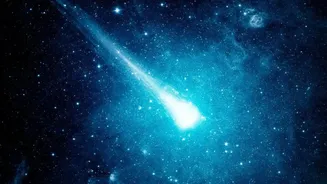
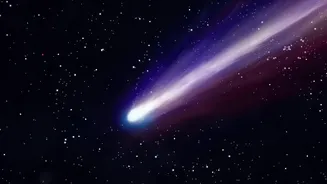
far from being a distraction, the image provided a perfect opportunity to dissect what happens when a piece of space rock meets our atmosphere. The image showcases a bright, multi-hued streak, a testament to the violent, fiery, and colourful process of a meteor's final moments. These images, often captured by networks like NASA's All-sky Fireball Network, are not just pretty pictures; they are data points that help scientists understand the composition and origin of these celestial visitors.
The Science of the Flash
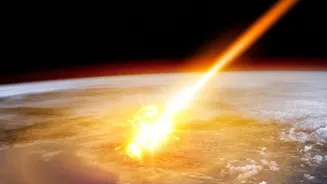
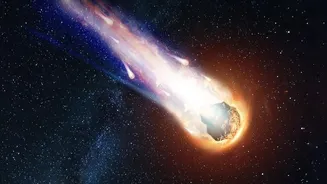
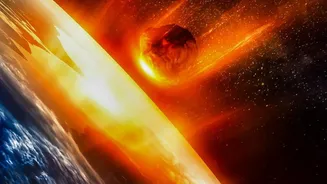
What we call a 'shooting star' is actually a small piece of rock or dust, called a meteoroid, burning up as it enters Earth's atmosphere at incredible speeds. The immense friction generated by collisions with air molecules heats the meteoroid and the surrounding air to thousands of degrees. This intense heat causes the rock to vaporise, turning its solid minerals into glowing gas. It's not just the rock itself that glows; the air around it becomes a superheated plasma that emits its own light. This combination of vaporised elements and excited atmospheric gases is what creates the brilliant flash we see from the ground.
A Rainbow of Vaporising Minerals
The captivating colours within a meteor's streak are a direct result of its chemical composition, much like a cosmic flame test. Different elements burn with different colours when vaporised at high temperatures. A greenish hue, for instance, often points to the presence of nickel and magnesium. An orange or yellow glow suggests a high concentration of sodium, while the rarer violet or purple hints at calcium. Iron, one of the most common components of meteoroids, typically produces a yellow or white light. By analysing the light spectrum of a meteor, scientists can determine which minerals were locked inside the rock, offering clues about its parent body—whether it was a comet or an asteroid.
Connecting the Dots in the Sky
While a single image is captivating, NASA's true strength lies in its network approach. The All-sky Fireball Network consists of over 17 cameras across the United States, which work together to observe meteors. When multiple cameras capture the same fireball, researchers can triangulate its path, calculating its trajectory, speed, and original orbit. This data is crucial for building models of the meteoroid environment that surrounds Earth, which helps in protecting spacecraft from potential impacts. Occasionally, this network can even help pinpoint where a larger fragment might have survived its fiery descent and landed as a meteorite, providing a physical sample for study—a free sample return mission, of sorts.
How to See Your Own Meteor Story
The image from August 3 is a timely reminder that one of the year's best celestial events is upon us. The Perseid meteor shower, known for its bright and plentiful meteors, peaks in mid-August. In 2026, the peak occurs around August 12-13, under ideal viewing conditions with a new moon ensuring dark skies. The Perseids are known for producing fireballs—exceptionally bright meteors that can leave behind long, colourful trails. When you head out to watch, pay attention to the colours. A flash of green or a streak of yellow is not just random; it is the visible signature of ancient minerals from the comet Swift-Tuttle, the parent of the Perseid shower, ending their millions-of-years-long journey in a brief, brilliant blaze of glory.