





A High-Stakes Commercial Hand-Off
On June 30, NASA awarded a total of nearly $590 million across four new delivery orders to three American companies: Astrobotic, Firefly Aerospace, and Intuitive Machines. This isn't a traditional contract where NASA builds its own hardware. Instead,
under its Commercial Lunar Payload Services (CLPS) initiative, the agency is essentially buying a delivery service to the Moon. Astrobotic received the largest share, worth $297.9 million, for two lander missions. Firefly Aerospace and Intuitive Machines were awarded $144.2 million and $148.3 million, respectively, for one mission each. All four robotic landings are slated to happen by the end of 2028 and are tasked with delivering crucial science instruments and technology to the lunar surface.
The New Delivery Fleet
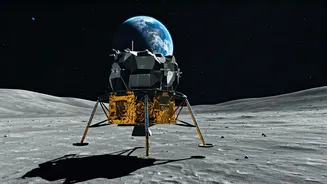
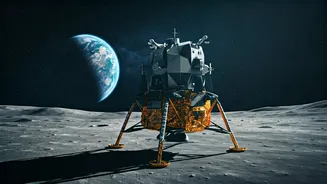
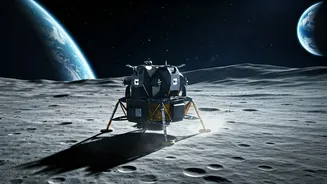
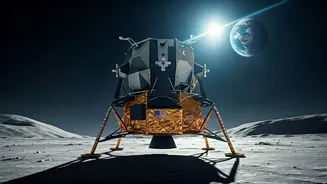
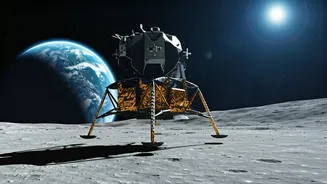
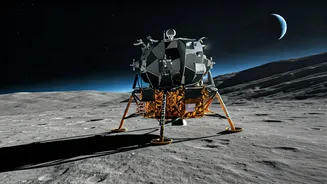
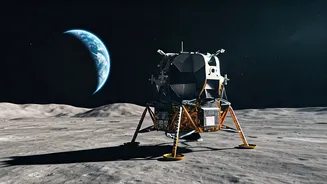
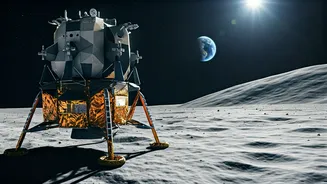
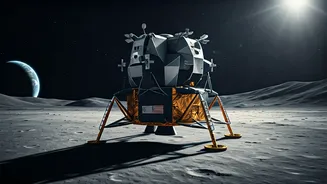
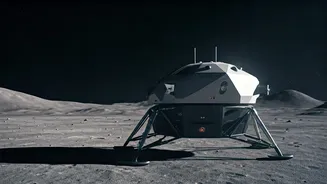
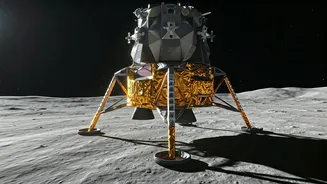
The companies involved are at the forefront of a burgeoning commercial space race. Astrobotic, a Pittsburgh-based firm, will fly two of its Peregrine landers. Texas-based companies Firefly Aerospace and Intuitive Machines will use their Blue Ghost and Nova-C landers, respectively. A key part of this strategy is speed and reliability; rather than inventing entirely new spacecraft, the companies will use updated versions of their existing lander designs. This approach is designed to accelerate NASA's mission cadence and prove the reliability of these private partners. While some past missions have faced challenges, including landers tipping over or failing to reach the Moon, each attempt provides crucial data for improving future flights.
Laying the Groundwork for a Moon Base
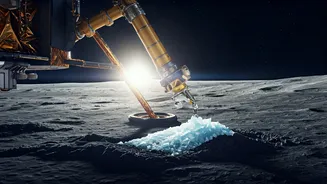
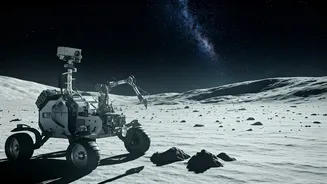
These missions are a foundational part of NASA's Artemis program, which aims to establish a long-term human presence on the Moon. The robotic landers are the scouts, sent ahead to test the terrain and technology before astronauts make the journey. Each lander will carry a standard suite of NASA instruments. This includes cameras to study how engine exhaust kicks up lunar dust, laser reflectors to help with precision navigation, and spectrometers to understand the radiation environment—all critical data points for keeping future astronauts safe. These repeated robotic missions are essential for proving that landing on the Moon can become a routine and reliable process before more expensive hardware and human lives are on the line.
A Shift in Space Strategy
The CLPS program represents a fundamental shift in how NASA operates. Instead of the Apollo model, where the agency owned and operated everything from end-to-end, NASA now acts as a customer for a fleet of private companies. This commercial-first approach is intended to drive down costs, spur innovation within the private sector, and create a sustainable lunar economy where NASA is one of many customers. By fostering a competitive ecosystem of providers, the agency hopes to create more frequent and affordable access to the lunar surface. This series of contracts is a clear signal that NASA is doubling down on this strategy as the cornerstone of its plans for both robotic and, eventually, human exploration of the Moon and Mars.
The Bigger Picture: India and the Global Moon Rush
NASA's investment is happening within a broader global context of renewed interest in the Moon. For audiences in India, this push mirrors the country's own celebrated achievements with the Chandrayaan missions. While NASA is leveraging private industry to build a commercial ecosystem, the ultimate goal is the same: advancing scientific knowledge and establishing a foothold on the Moon. These commercial landings will scout locations and test technologies vital for the planned Artemis astronaut missions, currently scheduled to begin around 2028. The success of companies like Astrobotic and Firefly will not only pave the way for a NASA Moon base but will also influence how other space-faring nations, including India, approach the next chapter of lunar exploration.