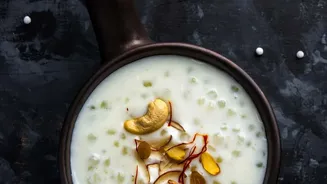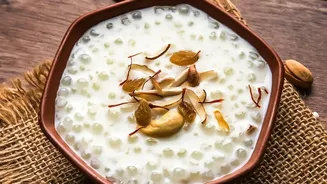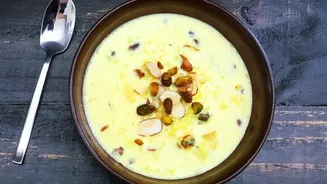





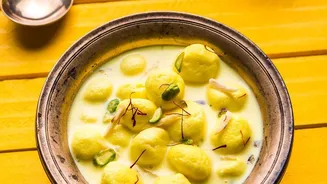

Imagine a creamy, luscious Indian sweet that’s not only delicious but also incredibly simple to prepare ahead of time. Sabudana Rasmalai, a clever twist on a classic, offers just that, and the secret lies in a surprisingly simple technique.
A Modern Twist on a Classic
Rasmalai is
a beloved dessert from the Bengal region, known for its soft, spongy discs of fresh cheese (chenna) soaked in fragrant, sweetened milk. Sabudana Rasmalai cleverly swaps the traditional chenna for tapioca pearls (sabudana). This makes it not only a unique textural experience but also significantly easier for home cooks, as it skips the intricate process of making and kneading chenna. The result is a dessert with the soul of rasmalai—the creamy, cardamom-scented milk—but with a delightful, chewy-soft bite from the sago pearls that is both familiar and new. This version is especially popular during fasting periods like Navratri, as sabudana is a common ingredient for such occasions.
The Power of the Pearl
The star of this dish is sabudana, or tapioca pearls, which are starch extracted from the cassava root. When cooked, these pearls become translucent and develop a uniquely soft, springy, and chewy texture. Their real magic, however, is their ability to act like little flavour sponges. On their own, tapioca pearls have a neutral taste, allowing them to fully absorb the sweet, aromatic flavours of the milk they are soaked in. Furthermore, the starch from the pearls naturally helps to thicken the milk base, contributing to the dessert's final creamy, custard-like consistency without the need for additional thickening agents. Getting the texture right is key; the goal is perfectly cooked, distinct pearls that are soft and yielding, not a sticky or mushy lump.
The Genius of a Chilled Base
Here lies the core technique supported by culinary science. The claim that a chilled milk base is superior rests on texture preservation. After the sabudana is cooked in water or milk until translucent, it is often rinsed under cold water. This step halts the cooking process and washes away excess surface starch, which is the main culprit behind stickiness and clumping. The cooked pearls are then added to a chilled or cooled milk base (the 'ras'). This is the crucial step. Adding hot, delicate sabudana to a hot liquid can cause the pearls to overcook, break down, and lose their distinct shape, resulting in a more homogenous, porridge-like texture. By adding them to a chilled base, the pearls cool down rapidly, firming up slightly and retaining their individual, bouncy integrity. They then slowly absorb the flavoured milk as the entire dessert rests in the refrigerator, ensuring each pearl is both flavourful and perfectly textured.
Why It's the Perfect Make-Ahead Sweet
This method makes Sabudana Rasmalai an ideal dessert for planning ahead. The components can be prepared separately: the sabudana can be cooked and cooled, and the milk base can be boiled, sweetened, flavoured with cardamom and saffron, and then chilled. When you’re ready to assemble, you simply combine the two. In fact, the dessert benefits from resting. Chilling the combined mixture for at least a few hours, or even overnight, allows the flavours to meld and deepen. The sabudana pearls have ample time to soak up the creamy, fragrant milk, resulting in a more integrated and delicious final product. Unlike some desserts that need to be served immediately, this one's flavour and texture actually improve with time in the fridge, making it perfect for gatherings and festivals where you want to get prep done in advance.
Tips for Perfect Sabudana Rasmalai
To ensure success, a few details matter. First, properly soaking the sabudana is essential for even cooking; the time can range from 30 minutes to a few hours depending on the pearl size. Many recipes recommend rinsing the sabudana well before soaking to remove excess starch. When cooking the milk base, use full-fat milk for the richest flavour and creamiest texture. Don't add sugar until the sabudana is fully cooked, as adding it too early can hinder the pearls from softening properly. Finally, let the dessert chill completely. It's meant to be served cold, which is when the creamy milk and chewy pearls offer the most refreshing and satisfying contrast.