



Understanding the 'Blood Moon'
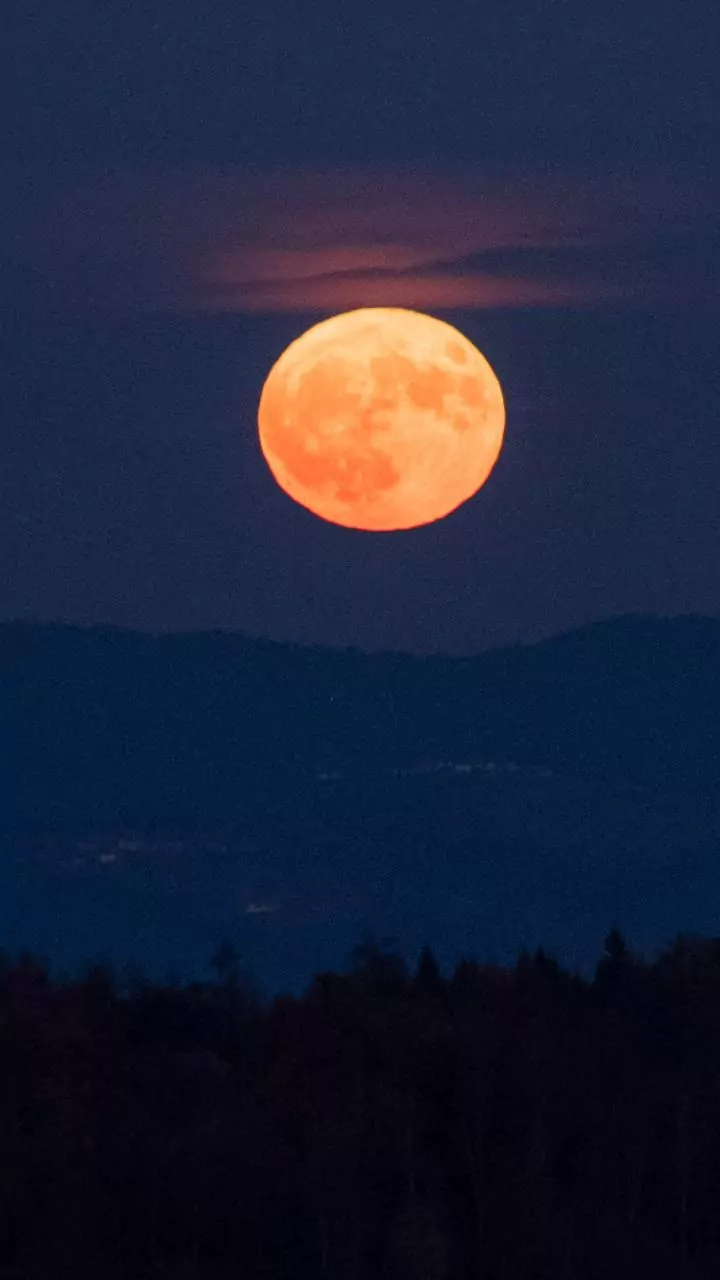
A total lunar eclipse happens when the Earth positions itself perfectly between the Sun and the Moon, casting its deep, central shadow (the umbra) over the lunar surface. But the Moon doesn't disappear entirely. Instead, it often takes on a stunning coppery
or deep red colour, earning it the popular nickname 'Blood Moon'. This eerie glow is caused by sunlight filtering and bending through Earth's atmosphere, with red light waves being cast onto the Moon. It's the equivalent of seeing all of Earth's sunrises and sunsets projected onto the lunar face at once.
The Viewing Challenge for India
The total lunar eclipse on March 3, 2026, presents a specific challenge for most observers in India: timing. The key phases of the eclipse will occur before the Moon has even risen for much of the country. According to the India Meteorological Department, the eclipse will be in progress as the Moon appears above the eastern horizon in the evening. The period of totality, when the Moon is fully engulfed in shadow, begins around 4:34 PM IST and ends at 5:33 PM IST. For most cities, moonrise will happen during the later partial phases of this event.
Where Are the Best Views?
While the view is limited, it is not impossible. The best chances of witnessing the awe-inspiring totality phase are in the far eastern and northeastern parts of India. Locations in the Andaman and Nicobar Islands and states like Arunachal Pradesh and Nagaland will see the moonrise early enough to catch the end of the full eclipse. For the rest of the country, from Delhi to Mumbai to Chennai, the spectacle will involve watching an already-eclipsed Moon ascend in the sky. Observers will be able to see the Earth's curved shadow gradually receding from the lunar disk as the event concludes around 6:48 PM IST.
How to Get the Most Out of the Eclipse
To maximise your chance of seeing this celestial drama unfold, preparation is key. First and foremost, find a location with a completely unobstructed view of the eastern horizon. Rooftops, hills, or open fields away from city lights are ideal. Unlike a solar eclipse, a lunar eclipse is perfectly safe to view with the naked eye, so no special glasses are needed. In fact, using a pair of binoculars or a small telescope can dramatically enhance the experience, bringing the reddish colour and the details of the lunar surface into sharp focus. Arrive early and be patient as you wait for the rising Moon to become visible against the twilight sky.
A Celestial Event Worth Waiting For
This event on March 3 is the only total lunar eclipse of 2026. Furthermore, it marks the last chance for anyone on Earth to see a 'Blood Moon' for nearly three years, with the next one not occurring until New Year's Eve of 2028. This long gap makes the March eclipse a particularly special occasion for astronomers and casual sky-watchers alike. Despite the viewing challenges in India, the sight of a partially or fully eclipsed Moon rising on the horizon is a rare and beautiful phenomenon that is well worth the effort to witness.