







A Quantum Leap for Indian Tech
Bengaluru is no stranger to technological milestones, but the recent inauguration of the AU-QUASAR campus marks a pivotal moment. This interdisciplinary hub, established by Alliance University in partnership with QpiAI, features India's first commercially
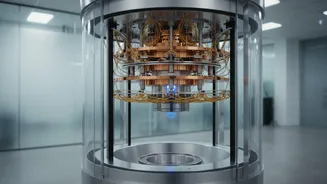
accessible, on-premises quantum computer. Unlike cloud-based services that offer remote access to quantum systems, this centre provides hands-on access to an 8-qubit superconducting machine, built in India by QpiAI. For students, researchers, and the thousands of startups in Bengaluru's ecosystem, this is a game-changer. It transforms quantum computing from a theoretical concept studied on simulators into a tangible piece of hardware that can be directly worked with and tested. The move was praised by tech leaders like Infosys co-founder Kris Gopalakrishnan as a defining moment for nurturing future innovators in India.
Demystifying Quantum Power
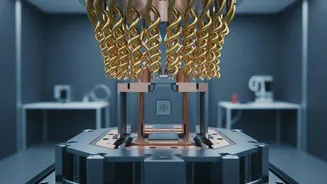
So, what makes quantum computing so revolutionary? In essence, while traditional computers use bits (either a 0 or a 1) to process information, quantum computers use 'qubits'. Thanks to the principles of quantum mechanics, a qubit can be a 0, a 1, or both simultaneously. This ability to exist in multiple states allows quantum machines to solve complex problems exponentially faster than even the most powerful supercomputers of today. The potential applications are vast and transformative, spanning drug discovery, financial modelling, advanced materials science, and the development of unbreakable encryption. However, building and maintaining these machines is incredibly difficult, requiring components to be cooled to temperatures colder than outer space. This complexity has, until now, kept direct hardware access limited to a handful of global tech giants and national labs.
Inside the Bengaluru Hub
The new centre at Alliance University's Electronic City campus is more than just a single computer. Named AU-QUASAR (Quantum AI School for Advanced Research), the facility is an entire campus dedicated to quantum computing, AI, and robotics. The 8-qubit QVidya system is the centerpiece, allowing users to run experiments and develop algorithms on real hardware. This hands-on experience is crucial. Previously, an Indian startup developing a quantum component had to fly to Europe, pay high fees, and face long wait times to test their technology. The Bengaluru hub, along with other similar open-access initiatives emerging in places like Amaravati, aims to eliminate this barrier, fostering indigenous innovation. The goal is to create a complete ecosystem where researchers can not only use the technology but also help build, test, and improve it.
Part of a National Ambition
This development is a key part of India's larger strategy. In 2023, the Union Cabinet approved the National Quantum Mission (NQM), a comprehensive plan with a budget of over Rs. 6,000 crore to scale up scientific and industrial R&D in quantum technology. The mission's ambitious goals include developing intermediate-scale quantum computers with 50 to 1,000 qubits within eight years and building secure quantum communication networks. The government has identified 86 institutions, including top IITs and the Indian Institute of Science (IISc), to drive research under the mission. The opening of accessible hardware centres like the one in Bengaluru is a crucial step in achieving these goals. It provides the necessary infrastructure to train a skilled workforce and allows the country's booming deep-tech startup sector to participate directly in the quantum revolution.
What 'Widened Access' Really Means
For India's tech community, widened access is transformative. It means a student at Alliance University can gain practical skills that were previously the exclusive domain of a few researchers at MIT or Google. It means a Bengaluru-based startup can test a new quantum sensor or algorithm without prohibitive costs or delays, accelerating their path to market. The centre is expected to serve over 200 global technology companies, defence and aerospace public sector undertakings, and the more than 8,000 startups in the region. This initiative shifts the focus from being mere consumers of technology to becoming creators. By fostering a domestic ecosystem for building and validating quantum hardware, India is not just participating in the quantum race; it's building its own track.