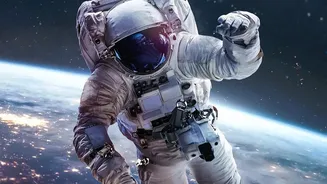





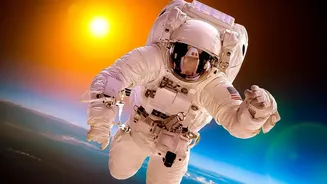

As humanity prepares for long-term missions to the Moon and beyond, ensuring astronaut safety is more critical than ever. In a bold move, NASA is looking beyond its own labs for answers, inviting the next generation of innovators to help solve these complex
challenges.
The Hazards of Deep Space
Living and working in space is inherently dangerous, but missions beyond the International Space Station present a new level of risk. Astronauts on the Moon or Mars will be exposed to significant threats that are less of a concern in low-Earth orbit. One of the most persistent problems is dust. Lunar dust is not like the soft particles in your home; it's sharp, abrasive, and electrostatically charged. During the Apollo missions, this dust clung to everything, wearing down space suits, clogging equipment, and causing skin, eye, and throat irritation for astronauts who inhaled it. Studies have shown these fine particles can be toxic to lung and brain cells, posing a serious long-term health risk. Beyond dust, there is the constant threat of cosmic radiation, which can damage DNA and increase cancer risk, and the profound psychological toll of isolation and confinement millions of miles from Earth. Solving these issues is essential before any long-term habitat can be established.
A Challenge for a New Generation
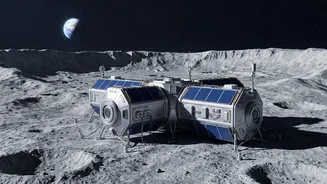
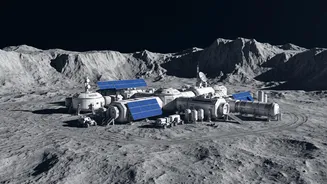
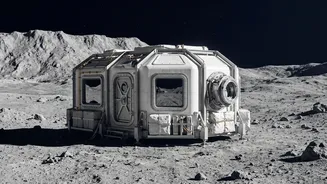
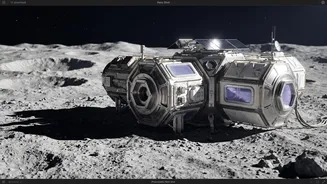
To tackle these formidable problems, NASA has launched the Moon Base Challenge, a competition inviting high school and university students to contribute ideas for a permanent lunar outpost. With a prize pool of $1 million, the challenge is designed to crowdsource innovative solutions across six key categories: power systems, construction, life support, mobility, communications, and, crucially, astronaut safety. This specific focus on safety encourages students to think about how to protect astronauts from the harsh lunar environment. The initiative is not just about finding solutions; it's about engaging a new generation in the mission to return humans to the Moon to live, work, and explore. NASA Administrator Jared Isaacman noted that the agency needs the 'curiosity, creativity, and the willingness to tackle hard problems without obvious answers' that students bring.
Who Is Answering the Call?
The Moon Base Challenge specifically targets student teams from high schools, colleges, and universities across the United States. Participants form small teams and register through the NASA STEM Gateway, with a deadline of January 25, 2027. The competition is structured to mirror how projects develop within the aerospace industry, requiring teams to produce concept proposals and trade studies. While this particular challenge is for U.S.-based students, it reflects a broader global trend. Space agencies worldwide are increasingly democratizing innovation. For instance, the NASA International Space Apps Challenge is a global hackathon that invites participants from all over the world, including India, to use space agency data to solve real-world problems. These initiatives show a clear signal that you no longer need to be a career rocket scientist to contribute to the future of space exploration.
More Than Just a Competition
For the students involved, the benefits extend far beyond the potential prize money. The challenge is an opportunity to gain invaluable handson experience by working on authentic mission design parameters. Participants develop careerrelevant skills in engineering, project management, and communications that are directly applicable to the aerospace industry. They get to tackle the same kinds of problems that fulltime NASA engineers face, from mitigating toxic dust to designing reliable life support systems. According to Elaine Ho, an associate administrator at NASA, the unique perspectives of students are key to envisioning a future away from Earth. By participating, students are not only building their resumes but are actively helping to lay the foundation for humanitys sustained presence on the Moon and eventual missions to Mars.