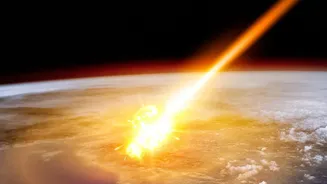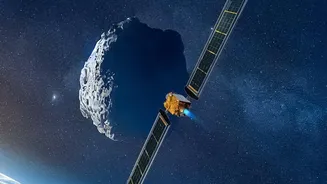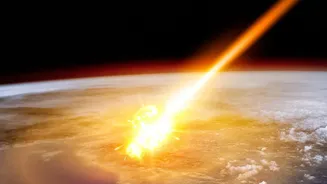







The idea of deflecting a killer asteroid often conjures images of Hollywood heroes and dramatic space missions. While NASA's DART mission proved we can physically alter an asteroid's path, a new study reveals a critical wrinkle in our plans.
Beyond Spherical Asteroids
For years,
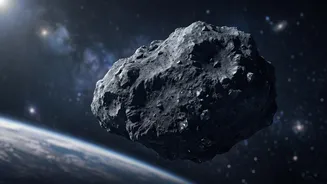
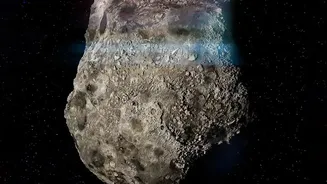
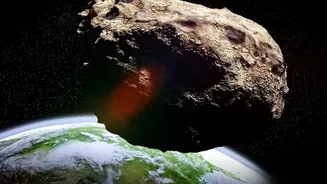
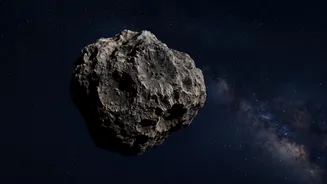
planetary defense models have relied on a major simplification to make their calculations manageable: treating asteroids as perfect spheres. While this makes the math easier, it ignores a fundamental truth of the cosmos: real asteroids are lumpy, irregular, and anything but spherical. This seemingly minor detail has huge implications. A new study from physicists at Sandia National Laboratories, published in the journal Icarus, highlights just how much these irregular shapes matter. The research suggests that our ability to nudge a dangerous asteroid away from Earth could be far more complicated than previously thought, demanding a more sophisticated approach before we ever need to defend the planet for real.
A Fivefold Difference in Effectiveness
The study used advanced new computer simulations to model a 'stand-off' nuclear detonation—one of the leading concepts for deflecting a large asteroid discovered with little warning time. This method involves detonating a nuclear device near the asteroid, using the resulting X-ray blast to vaporize part of its surface and push it off course. The researchers found that for the same lumpy, simulated asteroid, hitting it with radiation from one angle produced a deflection nearly five times greater than hitting it from another. In one simulation, the change in velocity was 3.9 millimeters per second, while another angle resulted in just 0.8 millimeters per second. 'We expected aim to matter,' said lead researcher Nathan Moore. 'What surprised us was how much'.
The Need for Faster, Smarter Models
The breakthrough came from a new algorithm that is over 1,600 times faster than previous methods. This leap in computational speed allowed the researchers to combine two critical elements for the first time: the realistic, complex shapes of actual asteroids and high-fidelity calculations of the physical forces involved. Previous models had to choose one or the other, either simplifying the asteroid's shape or the physics of the explosion. This new, combined approach provides a much more detailed and realistic picture of what might happen. However, even these advanced models have limitations. They can simulate how the surface of an asteroid will break up but cannot yet accurately predict if the entire body will shatter—a crucial detail, as the goal is to push the asteroid, not break it into a cloud of smaller, still-dangerous fragments.
Implications for Planetary Defense
These findings do not mean that planetary defense is impossible. Instead, they represent a critical step forward in understanding the challenge. It shows that future missions will require incredibly detailed 3D maps of any threatening object, likely gathered from flyby spacecraft. Mission planners would need to use this data to calculate the optimal point of impact to maximize the push and avoid unintended consequences, like sending the asteroid into an uncontrolled spin. While this adds layers of complexity, such as the time needed to gather data and the precision required to execute the plan, it moves the concept of asteroid deflection from the realm of guesswork into a more refined science. The study underscores that in a real planetary defense scenario, careful aim is not just a detail—it could be the deciding factor between success and failure.