



A New Digital Brain for Lunar Science
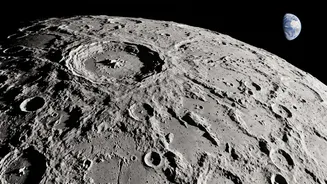
At its core, the newly launched tool is a 'foundation model'—a powerful type of AI trained on immense quantities of data. Specifically, it has been fed decades of information gathered by NASA's lunar missions, most notably the trove of high-resolution
images and data from the Lunar Reconnaissance Orbiter (LRO). The LRO mission alone has generated more data than all of NASA's other planetary missions combined. Before now, researchers had to manually sift through this mountain of information or use less powerful models built for single, specific tasks. This new AI acts as a sophisticated, all-purpose tool that can process and find patterns across different types of data, from various instruments, all at once. Think of it less as a simple map and more as an intelligent atlas that understands geology, topography, and composition simultaneously.
Mapping Craters and Hunting for Ice
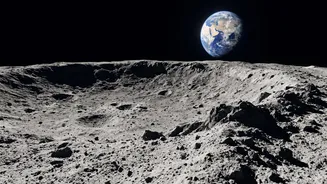
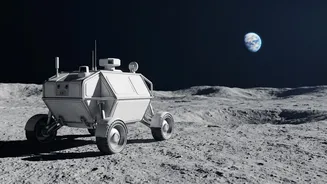
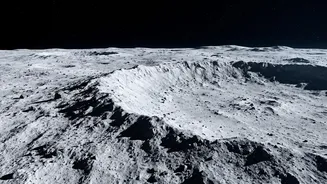
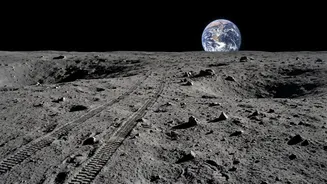
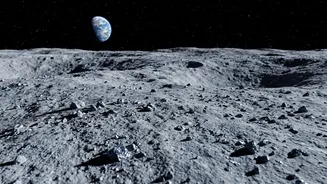
So, what can this AI actually do? Its applications are critical for the success of future missions, including NASA's Artemis program, which aims to establish a sustained human presence on the Moon. One of its primary jobs is to rapidly identify and map key geographic features with much higher accuracy. This includes finding safe landing zones, studying unusual volcanic formations that challenge our understanding of the Moon's history, and detecting previously uncatalogued craters. Perhaps most importantly, the model can help pinpoint the location of water ice. This ice, believed to be trapped in permanently shadowed regions near the lunar poles, is a vital resource for future astronauts, as it could provide drinking water, breathable oxygen, and even rocket fuel.
Why 'Open-Source' Is a Game Changer
The collaboration between NASA and IBM is not just about building a powerful tool; it's about sharing it with the world. By making the AI model open-source and available on the popular platform Hugging Face, they are effectively democratizing lunar science. This means any researcher, university, or space agency around the globe can access, use, and even fine-tune the model for their own specific research questions without having to build a costly AI from scratch. This collaborative approach is a core part of NASA's Open-Source Science Initiative, which aims to accelerate discovery by making data and tools widely accessible. This model continues a tradition of partnership that has already produced similar AI tools for studying Earth and the Sun.
The Power of a Public-Private Partnership
This launch highlights the synergy between public scientific institutions and private technology leaders. NASA possesses decades of unparalleled scientific data from its space missions, a veritable library of the cosmos. IBM, a leader in AI and cloud computing, brings the expertise to build the complex architecture needed to make sense of that information. As NASA's chief science data officer, Kevin Murphy, stated, collecting data is only half the job; the other half is making it easier for scientists to use. This partnership allows NASA to turn its petabytes of raw data into actionable discoveries, speeding up the scientific process significantly. The model is a prime example of how AI can serve as a bridge between vast datasets and new scientific breakthroughs.