








The Vision: A Decongested, Connected India
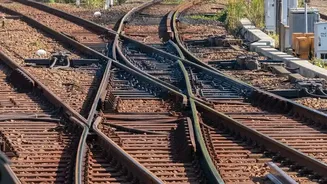
The Cabinet Committee on Economic Affairs (CCEA), chaired by the Prime Minister, has approved three significant multitracking projects for Indian Railways. The core goal is to tackle a persistent problem: congestion. Many of India's key railway corridors
are operating well beyond their capacity, leading to delays for both passenger and freight trains. By adding new lines to existing routes, this initiative aims to significantly enhance mobility, improve operational efficiency, and make train services more reliable. This expansion is a key component of the PM Gati Shakti National Master Plan, which focuses on integrated infrastructure planning to ensure seamless connectivity for people, goods, and services.
The Five States in Focus
This railway expansion is set to directly benefit 14 districts across five states: West Bengal, Jharkhand, Odisha, Madhya Pradesh, and Chhattisgarh. The approved works consist of three main projects: the construction of a fourth line along the Kharagpur-Jharsuguda (Bagdehi) section, a fourth line on the Katni-Pendra Road section, and a third line between Bilaspur (Uslapur) and Pendra Road. In total, these projects will add approximately 656 kilometres to the existing railway network, strengthening critical transportation arteries in eastern and central India. The government has set a target for completion by the 2029-30 financial year.
Boosting the Industrial and Rural Economy
This expansion is not just about laying tracks; it's about unlocking economic potential. The new lines are expected to facilitate an additional 27 million tonnes of freight traffic per year. This is particularly crucial for the mineral-rich regions of eastern and central India, as the routes are essential for transporting bulk commodities like coal, cement, iron, and steel. By creating dedicated paths and reducing bottlenecks, the project aims to lower logistics costs for industries. Beyond big industry, the plan is projected to improve connectivity for nearly 4,790 villages, home to a combined population of about 56 lakh people. This enhanced access is expected to provide residents with better opportunities for employment, education, and healthcare by connecting them more easily to major urban centres.
More Than Just Economic Gains
The project also promises significant environmental benefits and a boost for tourism. By shifting more freight from road to rail, which is a more energy-efficient mode of transport, the initiative is estimated to reduce oil consumption and carbon dioxide emissions. Furthermore, the improved rail network will enhance access to a number of important religious, archaeological, and ecological destinations. These include the Taratarini Temple, the Shri Kshetra Jagannath Temple, Bandhavgarh Tiger Reserve, and the Achanakmar Tiger Reserve, among others. This could provide a significant boost to tourism in these regions, creating more economic opportunities for local communities.