








A New Gateway in Tamil Nadu
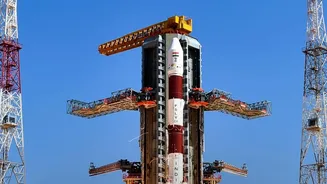
Deep in Tamil Nadu’s Thoothukudi district, near the coastal village of Kulasekarapattinam, the Indian Space Research Organisation (ISRO) is building its second spaceport. Spread across more than 2,200 acres, this new Small Satellite Launch Complex (SLC)
is not just an alternative to the bustling Satish Dhawan Space Centre in Sriharikota; it's a strategic asset. Its key advantage is geographical. Rockets launching into polar orbits from Kulasekarapattinam can fly directly south over the Indian Ocean. This avoids the costly “dog-leg manoeuvre” required from Sriharikota to steer clear of Sri Lanka’s landmass, saving precious fuel and allowing rockets to carry heavier payloads. The facility is purpose-built for the Small Satellite Launch Vehicle (SSLV), a rocket designed for the booming market of small, on-demand satellite deployments.
What 'Industry-Led' Actually Means
The most significant development at Kulasekarapattinam is not the concrete and steel, but the new operating model. In a landmark move, India’s space regulator, IN-SPACe, has invited private companies to take over the complete operations and management of the new launch complex. This is a major departure from the traditional ISRO-centric model, where the agency handled everything from start to finish. Under this new public-private partnership, a selected Indian company or consortium will be responsible for the end-to-end management of the facility. This includes everything from launch campaign operations and mission readiness to maintenance, logistics, and coordinating with satellite customers. ISRO will transition into a supportive role, providing technical guidance and training to ensure a smooth handover. The goal is to create a system where private industry handles the routine business of launches, freeing up ISRO's brilliant minds for bigger challenges.
The Strategic Shift: Why Now?
This pivot to a private-led model is driven by two primary factors: efficiency and ambition. The global market for small satellite launches is exploding, and India wants a larger piece of the pie. By handing over SSLV launches to the private sector, ISRO can dramatically increase its launch frequency, moving towards an on-demand service model that commercial clients require. This frees up the agency's invaluable resources—its scientists, engineers, and the primary Sriharikota spaceport—to concentrate on strategic, high-stakes national missions. These include the Gaganyaan human spaceflight program, deep-space exploration missions to Venus and Mars, and the development of next-generation heavy-lift rockets. It’s a strategic division of labour: let the industry manage the established commercial services while ISRO pushes the frontiers of science and exploration.
Fueling India's Space Economy
The implications of this move for India’s economy are profound. It's a clear signal that India is not just opening its space sector, but actively building an ecosystem where private companies can thrive and even operate critical national infrastructure. This policy is expected to create a surge in high-tech jobs, foster innovation among space startups, and build a robust domestic supply chain for space hardware. The commercialisation of the SSLV, with its production transferred to industry giants, is a key part of this vision. By lowering the barrier to entry for private players and even offering subsidies for using its facilities, India is positioning itself as a highly competitive and attractive hub for global space commerce, aiming to significantly grow its share of the multi-billion dollar international space economy.